


This Islamic guide is for non-Muslims who would like to understand Islam, Muslims (Moslems), and the Holy Quran (Koran). It is rich in information, references, bibliography, and illustrations. It has been reviewed and edited by many professors and well-educated people. It is brief and simple to read, yet contains much scientific knowledge. It contains the whole book, A Brief Illustrated Guide to Understanding Islam, and more.
A Brief Illustrated Guide to Understanding Islam (P/B)
$3.41
Hurry up, Only 3 left.

Highlights:
somdn_product_page
Compare
Discusses some evidence for the truth of Islam, the scientific miracles in the Holy Qur’an, and the great challenge to produce a single chapter like the chapters of the Holy Qur’an.
Frequently Bought Together
1 Item
$3.41
2 Add-Ons
$10.45
Total
$13.86
Additional information
| Weight | 0.4 kg |
|---|---|
| Dimensions | 18 × 14 × 1 cm |
| Product Type | Book |
| Author | |
| Publisher | Darussalam |
| Pages | 74 |
| ISBN | 9789960340111 |
Reviews (0)
Be the first to review “A Brief Illustrated Guide to Understanding Islam (P/B)” Cancel reply
You must be logged in to post a review.
You may also like…
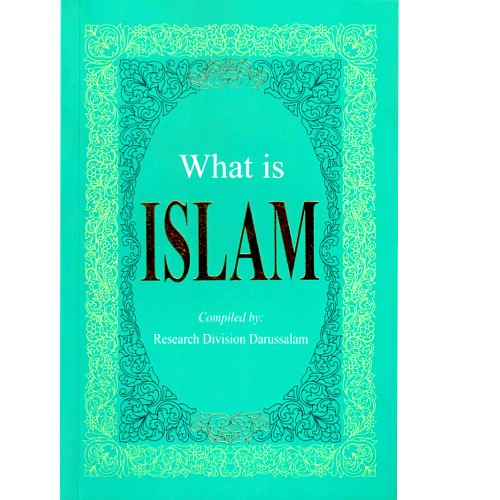


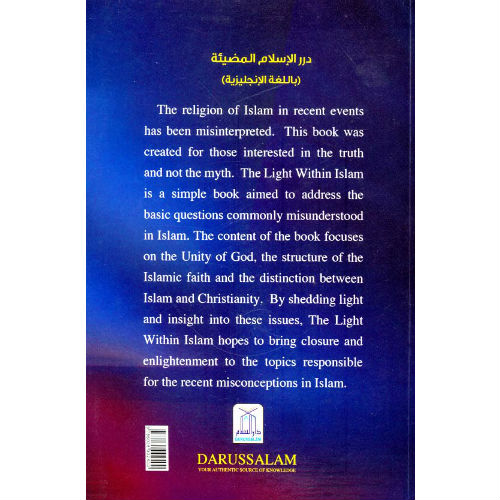
The Light Within Islam
Highlights:
The religion of Islam in recent events has been misinterpreted. This book was created for those interested in the truth and not the myth. The Light within Islam is a simple book aimed to address the basic questions commonly misunderstood in Islam. The content of the book focuses on the Unity of God, the structure of the Islamic faith and the distinction between Islam and Christianity. By shedding light and insight into these issues, The Light within Islam hopes to bring closure and enlightenment to the topics responsible for the recent misconceptions is Islam.


In Defence of the True Faith (H/B)
Highlights:
Darussalam is proud to present the abridged English translation of the classic work: Al-Bidayah wan Nihayah, focusing exclusively on the battles, expeditions and Peace Treaties undertaken in the lifetime of Prophet Muhammad (peace and blessings be upon him). This volume contains a detailed account of the most momentous events from the Battle of Badr to the Battle of Mu’tah -that occurred to the Muslims under the leadership of the Messenger of Allah. Many of these events have become immortalized by the Noble Qur’an and continue to provide invaluable lessons to humanity, now and forever.
Al-Bidayah wan Nihayah (The Beginning and The End) by the renowned scholar Abu Al-Fida ‘Imad ad-Deen Isma’eel bin ‘Umar ibn Katheer/Kathir, is considered one of the most authoritative sources on Islamic history.

Choosing Faith (P/B)
Highlights:
Choosing Faith In a world of spiritual options, people constantly tell us what to believe. Yet, while we hear these pleas, we’re already functioning with existing beliefs–even if they are beliefs by default. So how do we choose what to believe–especially in the area of faith? Do we need to choose.


A Glimpse at the Beauty of Islam (Old Edition)
Highlights:
This publication is a summary of different facets of Islam which are briefly and beautifully introduced. Every aspect and every perspective of it gives guidance and wisdom something for all times and all places, a master key that fits every lock-that is what Islam is.
$1.82 $2.05


Related Products

Islam A Total Beginners Guide – Part Two (P/B)
Highlights:
In present era we are facing lot of questions:
• What is status of women in Islam?
• Who is superior – man or women?
• What does Islam say about inter-religious marriages, man’s treatment towards his wife and privacy in homes?
• What does Islam say about dress, veil, clothing and ornaments, perfumes and the wisdom of banning gold and silk for men?
This beginner’s guide to Islam answers all such questions.

Prophet Muhammad: A Blessing for Mankind
Highlights:
Prophet Muhammad (blessings and peace of Allah be upon him) and the lessons he taught us from the continued hardships he underwent in every stage of his life are a real blessing for humankind. Being an orphan child made him compassionate to widows and orphans as well as to the poor. His multiple marriages strengthened the ties of kinship amongst the different tribes, dissolving long-standing enmity. His message and prophethood were challenged by the polytheistic society in Makkah, forcing him and his few followers to emigrate to Madinah. Despite his illiteracy and the struggles he faced, he conveyed Allah’s Book, the Noble Qur’an, to all humanity, teaching them the values and principles that are presently adopted by billions of Muslims throughout the world. In the Qur’an, Allah, the Almighty addresses the Prophet (blessings and peace of Allah be upon him), saying: {We have sent you only as a mercy to the worlds.} (Qur’an 21: 107)
$1.82 $2.05

Polygamy in Islam (P/B)
Highlights:
Polygamy is the Muslim practice most frequently and severely maligned by Westerners and modernist Muslims. This book can be read with profit by all unprejudiced readers who wish to know its justification and rationale.
One of the greatest contrasts between Islam and the West is their conflicting concepts of relations between the sexes. Indeed, the very first question a Muslim convert is confronted with by an American or European is ‘Why does Islam allow four wives?’ This book…replies straightforwardly to that question and much more.
The authors describe all the most important characteristics of marriage in Islam, pointing out that the Western notions of sex equality and romantic premarital ‘love’ are not necessary in Islamic marriage based on piety and the commitment on the part of both parents to win the pleasure of Almighty Allah.’
This book contains basic guides for anyone interested in understanding the rights and obligations of males and females in Islamic plural marriage. The guidelines have been drawn from the Quran, Hadith and opinions of Islamic scholars.

New Directions in Islamic Education : Pedagogy and Identity Formation (P/B)
Highlights:
New Directions in Islamic Education explores the relationship between pedagogy and the formation of religious identities within Islamic education settings that are based in minority and majority Muslim contexts. Based on empirical research, the book engages critically with the philosophical, theological and cultural dynamics that inform Muslim educational thought and practice. The book offers an integrated model of Islamic education that identifies the heart of the Islamic educational imagination as tarbiyah, a transformative process of becoming. Overall, this book seeks to ground the theory and practice of Islamic education within the experience of the educator and the learner, and it synthesises the spiritual foundations of Islam with the tradition of critical reflection within the classical Muslim educational heritage. This ground breaking and wide-ranging work should be of interest not only to Muslim educators and education specialists, but also to social scientists, theologians and policy makers.

Rizq Lawful Earnings (P/B)
Highlights:
Narrated by Umar Ibn al-Khattaab (May Allah be pleased with him), the Prophet (Peace be upon him) said:
“If you put your faith completely in Allah, He will arrange for your sustenance in the same way as he provides for the bird. They go out in the morning with their stomachs empty and return filled in the evening.” (Tirmidhee)
This book discusses the place of pride Islam gives to making lawful earnings and rizq through hard work and striving. It also looks at the contempt Islam places on begging and indolence. Then it looks at which earnings are lawful, which are not and the many ways by which wealth can increase while seeking the pleasure of Allah (Glorified and Exalted is He).

Dream Interpretation According to the Qur’an and Sunnah (P/B)
Highlights:
Separates the authentic Islamic teachings on dream interpretation from the myths, superstitions and fabrications being circulated on the subject. It also provides a guide for dream interpretation according to references found in the Quran and authentic hadeeths.
Since the English publication of Muhammad Al-Akili’s 508 page work entitled, Ibn Seerin’s Dictionary of Dreams: According to Islamic Inner Traditions in 1992, followed shortly thereafter by Dreams and Interpretations by Ibn Seereen, there has been an explosion of dream interpretation and interpreters among English-speaking Muslim communities in the West. On the other hand, dream interpretation has been a long established tradition in the Muslim East. However, it has become so mixed up with superstition, myths and fortunetelling, that most educated Muslims shun this area. The fact of the matter is that dream interpretation is mentioned in the Quran and was regularly practised by the Prophet (pbuh), himself. Consequently, there is a real need to understand this subject, especially, considering that humans spend about a third of their lives sleeping.

Wholeness and Holiness in Education An Islamic Perspective (P/B)
Highlights:
It was initially an adaptation of Shah ‘Abdul Qadir Muhaddith Dehlawi’s translation and commentary known as Mudih al-Qur’an which according to many great ‘ulama’ is devinely inspired and accepted by all Muslims.

Means of Steadfastness in Islam
Highlights:
Steadfastness and patient perseverance in Allah’s religion is a basic requirement that should be met by every sincere Muslim who wants to stick to the Straight Path with understanding and determination. Muslims today face many temptations and distractions. Those who consciously seek the means of steadfastness will succeed and those who are negligent will, sadly, suffer the doubts and confusion which are more severe now than ever before. Happy are those who seek the way out and join the righteous, dedicated Muslims, and who spare no effort to learn their religion and remain steadfast. This valuable book deals with all these issues and points out the means of steadfastness that every Muslim should learn and practice. The author also discusses common worldly distractions and explains how to deal with them.

Kindness to Parents
Highlights:
Kindness to Parents is a very enlightening booklet by Abdul Malik Al-Qasim. He has collected several stories and narrations that demonstrate the Birr (being dutiful) and kindness to our righteous Salaf towards their parents’ needs and necessities, in obedience to Allah’s worship in sincerity. He refers from the Noble Qur’an that a man is never allowed to say ‘Uff” (fie) if he smells a bad order coming from his parents or one of them.
The author has exposed shortcomings and errors of many among us who don not preserve the rights of their parents.

Ibn Taymeeyah’s Essay on the Jinn (P/B) ASN
Highlights:
Dr. Abu Ameenah Bilal Philips has rendered Ibn Taymiyah’s treatise, Eedaah-ud-Dalaalah fee ‘Umoom-ir-Risaalah, from volume 19 of Majmoo‘-ul-Fataawa into very readable English. This abridged and annotated translation is significant in that it is perhaps the first book available in English exclusively on the topic of spirit-possession and exorcism in Islam.
Ahmad ibn ‘Abdul-Haleem ibn Taymeeyah was bron in the town of Harran [near Edessa, in what was once Northern Iraq, but is now called Orfa and is a part of Turkey.], in the year 1263 CE. His father was a leading scholar of the Hanbalite school of Islamic law and so was his grandfather, who authored Muntaqaa al-Akhbaar, the text of ash-Shawkaanee’s Hadeeth classic Nayl al-Awtaar.
Ibn Taymeeyah mastered the various disciplines of Islamic study at an early age and read extensively the books of the various sects and religions in existence at that time. Much of his time and effort was spend defending the orthodox Islamic position against a tidal wave of deviation which had swept over the Muslim nation. Consequently, he faced many difficulties from both the prominent sectarian scholars of his time and from the authorities who supported them. His clashes with them led to his imprisonment on numerous occasions. Ibn Taymeeyah also fought, not only against internal enemies of Islaam, but also against its external enemies by both his Fatwaas (Islamic legal rulings) and his physical participation in battles. His ruling allowing the taking up arms against groups which recognized the Shahaadataan (declaration of faith) but refused to uphold some aspects of the fundamental principles of Islaam, greatly affected the resistance movement against the Tartars who had declared their acceptance of Islaam but did not rule according to divine law.
During these struggles he wrote countless books and treatises demonstrating his extensive reading and knowledge, not only of the positions of the early scholars, but also those of the legal and theological schools which had subsequently evolved. Ibn Taymeeyah also had a major effect on the open-minded schoars of his day, most of whom were from the Shaafi’ite school of law. Among the most famous of his students were IBN KATHEER, ADH-DHAHABEE and IBN AL-QAYYIM. The author died in 1328 while in prison in Damascus for his Fatwaa against undertaking journeys to visit the graves of saints [Ibn Taymeeyah’s ruling was based on the authentic statement reported by Abu Hurayrah wherein the Prophet Muhammad (sallallaahu alayhi wasallam) said, “Do not undertake a journey except to three masjids; this masjid of mine, Masjid al-Haraam (Makkah) and Masjid al-Aqsaa (Bayt al-Maqdis).” Collected by Al-Bukhaaree and Muslim]. His Fatwaa had been distorted by his enemies to say that he forbade visiting the Prophet Muhammad’s (sallallaahu alayhi wasallam) grave.

Let Us Be Muslims (P/B)
Highlights:
LET US BE MUSLIMS is a new edited English version of Sayyid Mawdudi’s Urdu Khutubat. It is no ordinary book, says Khurram Murad in his long Introduction, for it has stirred more hearts and impelled more lives to change their course than any of his more erudite works. In these Friday congregational addresses, Sayyid Mawdudi expounds such familiar themes as Iman, Islam, the Prayer, Fasting, Almsgiving, Pilgrimage and Jihad. But, in an unusually beautiful, powerfully reasoned, eloquent and passionate, and yet simple and lucid style,
“Sayyid Abul A’la Al-Mawdudui (1903-1979), one of the chief architects of contemporary Islamic resurgence, was the an outstanding Islamic thinker and writer of his time. He devoted his life to expound the meaning and message of Islam and to organise a collective movement to establish the Islamic Order. In this struggle, he had to pass through all kinds of sufferings.
Between 1948-67, he spent a total of five years in different prisons of Pakistan. In 1953, he was also sentenced to death by a Martial Law court for writing a ‘seditious’ pamphlet, this sentence being later commuted to life imprisonment. In 1941, he founded Jama’at-I Islami, of which he remained Amir, until 1972 and which is one of the most prominent Islamic movements of our day. He authored more than one hundred works on Islam, both scholarly and popular, and his writings have been translated into forty languages.”
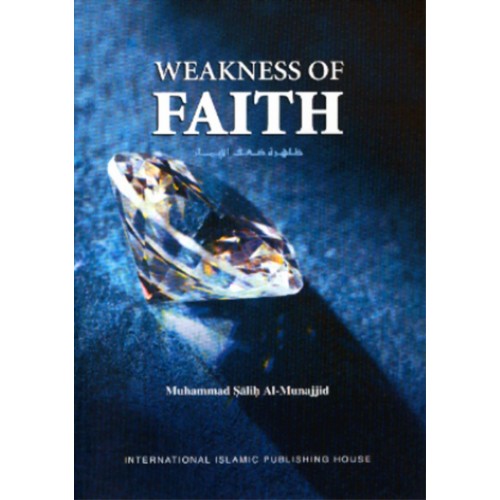

Weakness of Faith (IIPH)
5 ★
5 ★
1 Rating
5 ★
1
4 ★
0
3 ★
0
2 ★
0
1 ★
0
Highlights:
The phenomenon of weak faith has become very widespread among Muslims, and many people complain about the hardness of their hearts. So often we hear the words, “I feel hardness in my heart,” “I do not find any joy in worship,” “I feel that my faith has hit rock bottom,” “Reading Qur’aan does not move me,” “I fall into sin so easily.” The effects of this affliction can be seen in many people, and this problem is the cause of every disaster and adversity.
One of the most important principles which must be understood in order to treat the problem of weak faith is that faith increases and decreases, or waxes and wanes. This is one of the basic principles of the ‘aqeedah of Ahl al-Sunnah wa’l-Jamaa’ah, who say that faith is something to be spoken in words, to be believed in in the heart, and to be put into action. Faith increases with obedience and decreases with disobedience.
‘… that they may grow more in Faith along with their (present) Faith…’ [al-Fath 48:4]
‘… Which of you has had his faith increased by it? …'[al-Tawbah 9:124]. aari, Fath, 1/51).
$2.95 – $6.82Price range: $2.95 through $6.82
HardcoverPaperback
Clear
Recently Viewed


Hello, Little Muslim!
Highlights:
A high contrast book that is best for your baby. Babies positively respond to high contrasting colors and it improves brain growth and visual development.

(READY STOCK✅) All About Prayer (Salah) Activity Book
Highlights:
Find out about the Muslim prayer with this fun sticker activity book. Features dot-to-dot drawings, coloring fun, puzzles to solve and over 60 stickers to stick.
Introduces children to the way Muslims prepare for prayer and the main parts involved in performing it, including calling adhan, facing the Kaaba and reciting words from the Qur’an.


Enjoy Your Life (B/W) – IIPH
5 ★
5 ★
1 Rating
5 ★
1
4 ★
0
3 ★
0
2 ★
0
1 ★
0
Highlights:
Enjoy Your Life! Enjoy Your Life: The Art of Interpersonal Relations as Exemplified in The Prophet’s Biography is a comprehensive guide towards improving interpersonal skills and hence, enjoying life. The author, Dr. Muhammad ‘Abdur-Rahmân al-‘Areefy, writes: An enjoyable life entails learning and practicing multiple skills; the few who truly apply them savour the success that comes with it. Of course, atop the list of the successful is the chief of humanity, Muhammad (blessings and peace be upon him). His entire life was an ocean of pearls that I have scattered throughout the pages of this book.
Enjoy Your Life! is not the product of an effort of a month or a year. Rather, it has resulted from the research that I devoted myself to for twenty years. I inscribed it with my tears, pouring my soul and squeezing my memories into it. I penned down various incidents involving the joy of our eyes – our first teacher, Muhammad (blessings and peace be upon him). I highlighted his exceptional talents; his skills in dealing with people and enjoying his life. Enjoy Your Life! contains personal memories, real-life experiences, and incidents that I have publicised for the first time – praying that Allah, the Exalted, makes them a source of benefit for you.
Enjoy Your Life! contains words that are straight from my heart, hoping to find a place in yours. It is the dearest and most beloved of my books. I ask Allah, the Exalted, to benefit others with it, make this effort solely for His sake, and amply reward all those who have contributed to spread it.


A Muslim Girl’s Guide To Life’s Big Changes (Ta-Ha)
4 ★
4 ★
1 Rating
5 ★
0
4 ★
1
3 ★
0
2 ★
0
1 ★
0
Highlights:
Motivational & Manners


Al-Jumu’ah: The Day of Congregation
Highlights:
In our busy lives, Friday comes around once a week. It often comes and goes without our being really aware of it. For many Muslim men, it may be punctuated by the congregational prayer that they make special efforts to attend. For many Muslim women, it may go by just like any other day. This ought not to be the case. In this unique book, Dr. Gowher Yusuf gives us reason to stop and think about how special Friday (al-Jumu‘ah) really is, and what we should be doing to achieve the many bounteous blessings it holds for those who observe it. Drawing constantly from the Qur`an and the Sunnah and the great works of the scholars of Islam, Dr. Gowher Yusuf explores this topic in depth and presents it to the reader in simple language for them to understand and ponder over. This book travels through the various issues pertaining to the Friday prayer and its Khutbah, or sermon. These issues are explained within the Islamic framework, thus abolishing any myths and misunderstandings and clarifying the topic for the reader. Dr. Yusuf writes: The day of the week known as al-Jumu‘ah, or simply Jumu‘ah, is Friday, and it is special. Compared to the other days of the week, Friday has been accorded the largest amount of merit, so much so that the father of all humankind, Prophet Âdam (peace be upon him), was created on this day and a particular prayer was ordered for this day. It was from the guidance given to Prophet Muhammad (blessings and peace of Allah be upon him) to magnify this day, honour it, and designate it for acts of worship. …On a Friday, we all will be gathered and will stand congregated in front of Allah, the Exalted, on the Day of Resurrection, also called the Day of Accountability or the Day of Judgement.


There are no reviews yet.