| Weight | N/A |
|---|---|
| Dimensions | 14.5 × 21.5 cm |
| Product Type | Book |
| Author | |
| Publisher | IIPH |
| ISBN | 9786035011020, 9789960850481 |
| Binding | Hardcover, Softcover |
| Pages | 272 |
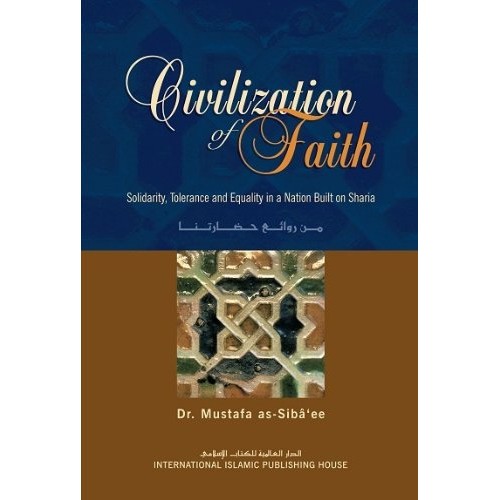
Civilization of Faith (IIPH)
$4.32 – $5.91Price range: $4.32 through $5.91
We are living at a time when western civilization is at its peak and the Muslim nations are at their weakest point. They are dazzled by the power of the west with its wealth, scientific discoveries and technological advantages. Those who are unfamiliar with history might be unaware that this has not always been the case. A few hundred years ago, it was just the opposite. The Muslim Ummah was the superpower of the age, and Muslims were leaders in culture, science and technology. The cities of the Muslim world were the centres of learning to which people came from far and wide. The Muslims, at one time, were the most technologically-advanced civilization on the earth. The uniqueness of their civilization lay in the fact that, although they achieved a great deal in materialistic terms, they remained a compassionate society where the poor and disadvantaged were cared for. This book is a reminder to Muslims that they have a glorious past; for many centuries, they had the upper hand over their enemies. They became masters of the world when they adhered to Islam; however, when they became preoccupied with worldly gain and the pursuit of luxury, decline set in. Today, if Muslims take their religion seriously, they will once again be supported by Allah, the Exalted, and lead the world in all spheres of life. Nasiruddin al-Khattab has translated this thought provoking book into English. The hardcover version of this book that we have for sale is the revised 3rd edition, published in 2011.
Be the first to review “Civilization of Faith (IIPH)” Cancel reply
You must be logged in to post a review.
Related Products
The Purity of Muslim (P/B)
According to a well-known hadith, cleanliness and purity are half of the faith. It is obligatory for a Muslim to be clean and in a state of purity in order to offer formal prayer and recite the Quran by way of ablution, a ritual shower, or dry ablution. Purity and cleanliness encompass both physical and spiritual aspects. Physical impurities can be removed by clean, pure water or dry, clean earth or stone, and this is a beginning step for spiritual cleanliness. In the Purity of the Muslim, Saeed al-Qahtani explains in a clear and comprehensive manner the types of various impurities and the ways to attain purity and cleanliness according to the teachings of the Quran and of the final prophet, Muhammad (blessings and peace of Allah be upon him).
Wahhabi Islam From Revival And Reform To Global Jihad
Until September 11, 2001 few Westerners had ever heard of “Wahhabism.” Now most of us recognize the word as describing an austere and puritanical type of Islam, mentioned frequently in connection with Osama bin Laden and Saudi Arabia and often named as the inspiration behind the 9/11 terror attacks. The word “Wahhabi” stems from the name of the founder of this system of thought, Muhammad Ibn Abd al-Wahhab (1702-1791), companion and religious adviser to Muhammad Ibn Saud, founder of the House of Saud. In this book Natana DeLong-Bas offers an in-depth study of the written works of al-Wahhab. She focuses on four areas: theology, legal theory, proselytizing through education and jihad, and law on women. Through a close reading of al-Wahhab’s texts she demonstrates that many aspects of 20th- and 21st-century Wahhabi extremism do not have their origins in his writings. Examples of this extremism include the emphasis on jihad, martyrdom and militancy, and misogyny. The strict division of the world into dar al-Islam and dar al-kufr, according to which only Wahhabi adherents are considered to be true Muslims and all others are non-Muslims who must be fought, is entirely absent from al-Wahhab’s work. Instead, argues DeLong-Bas, all of these themes were only added to Wahhabi teachings in the 19th century following armed engagement with the Ottoman Empire. DeLong-Bas’s study fills an enormous gap in the literature about Wahhabism by returning to the original writings of the founder of the movement. She debunks the common journalistic portrayal of Muhammad Ibn Abd al-Wahhab as an illiterate, rural bumpkin with no scholarly formation. Her revisionist reading of al-Wahhab’s thought will be controversial but impossible to ignore. The book will be essential reading for students and scholars of Islam as well as for those interested in the background of this dangerous modern ideology.
Scientific Signs In Prohibiting Flesh of Swine (P/B)
Scientific Signs In Prohibiting Flesh of Swine
Manhiyyat Prohibitions in Islam (P/B) (IIPH)
Whatever has been prohibited in the Qur’an and the Sunnah is for a good reason. Every Muslim is commanded to learn his or her religion, and being aware of these prohibitions is part of that essential knowledge. The Qur’an and the Sunnah enjoin virtuous behaviour, and any actions they prohibit are destructive deeds that a Muslim should avoid. In Prohibitions in Islam, Shaykh Muhammad Sâlih al-Munajjid explains that Allah Almighty and His Messenger (blessings and peace be upon him) have prohibited everything that contains any sort of harm or evil. These prohibitions vary in their degree of evil: they are either forbidden or detestable, and a practicing Muslim should avoid both kinds.
Islam is Your Birthright (IIPH)
Majed Al-Rassi’s popular booklet, compiled from the works of respected writers on the subject of comparative religion, has been revised and greatly expanded in this new edition. Islam is Your Birthright is a useful and comprehensive guide for Muslims who would like to know how to address non-Muslims on the subject of the relationship between Islam, Christianity and other religions. It is as well a helpful, easy-to-follow explanation of the basic precepts of Islam that interested non-Muslims can pick up and read, without having had any prior study of Islam. Wise men and women know that they are in existence for a purpose and a final destination, whether they know that destination or not. Also, wise people know that if they do not know where they are going, then they will never arrive. In this little book, light is focused on: Why human beings were created What is their final destination How to reach ‘safely’ to that destination
Fatawa Essential Rulings For Every Muslim Woman (P/B)
This book is an obligation to every Muslim, both male and female, to attain the knowledge of Islam that is necessary for them in their daily lives. There are many books available on various aspects of Islam in English language, but most of them deal with aspects of general nature.
There are many rulings in Islam that are concerned with Muslim women only. It is the job of every Muslim woman to obtain adequate knowledge of what is addressed to her with respect to her religion.
All these specific issues relating to Muslim women, have been compiled in the book which is in-between your hands, in the form of questions and answers. Each of the questions presented in it, was addressed to world renowned scholars, both of our time and those who have passed away. In turn, the scholars answered them in simple language and concise manner, so that Muslims women may increase their knowledge of Islam and, eventually, become close to their Creator.
Trials and Tribulations
These two treatises deal with the issue of trials and tribulation, extremely essential for every Muslim especially in the times that we are living in today. People often see, and hear of, the believers being afflicted with adversity and tribulation, and conversely they often see, and hear of the disbelievers attaining leadership and wealth in this world. This leads them to mistakenly believe that well-being in this world is only reserved for the disbelievers. A believer may face many trials and tribulations that test his faith, patience and endurance. In a world full of conflict and war, with many also suffering from personal and family problems, shaytan causes a person to question many things. If a Muslim is tried with a difficulty, then the reasons for this are many – including one’s own sin, which arise from leaving something obligated in Islam or comitting an act that is prohibited. Trials are also a means of Allaah purifying and aiding His servants, ennobling them and granting well-being through His Wisdom. The most severely of those who were tried were the Prophets and then those closest to them in following their guidance.
Tolerance In Islam
This short book examines the concept of tolerance in Islam. The Arabic word that is translated in English as ‘tolerance’ encompasses a much richer meaning than the idea of putting up with something grudgingly. It conveys a reciprocal sense of generosity, forgiveness, ease and smoothness.
Problems and Solutions (IIPH)
What should I do if I miss the fajr prayer? What are the consequences of excessive laughter? How should I deal with insinuating thoughts from Satan? How can I control my bad temper? What is so bad about staying up late night after night? Drawing on the great guidance of the Qur’an and the Sunnah, Shaykh Muhammad Sâlih al-Munajjid answers these questions and more, giving informative explanations and practical solutions to help you improve in your worship and in your performance of everyday activities.
Fatawa-fatawa Tentang Wanita (H/B)
Buku ini merupakan kumpulan fatwa-fatwa pilihan yang berkaitan dengan masalah wanita, yang dihimpun dari fatwa-fatwa Syaikh Abdul Aziz bin Baz, Syaikh Muhammad al-Utsaimin, Syaikh Abdullah al-Jabrain, dan fatwa-fatwa Lajnah Da’imah lil-Ifta’. Buku ini penting dimiliki setiap muslimah, karena di dalam buku ini terdapat jawaban-jawaban atas persoalan-persoalan yang dihadapi atau dialami oleh wanita muslimah dalam kehidupannya, di mana banyak dari persoalan-persoalan tersebut yang tidak didapatkan jawabannya dalam buku-buku klasik.
This is the Indonesian translation of Fatawa: Rulings for Muslim Woman. Acquiring knowledge of Islam is incumbent upon every Muslim – male and female – in order to live one’s life according to the commands and recommendations of the Qur’an and the Sunnah of Allah’s Messenger (blessings and peace of Allah be upon him). Naturally, women have some specific issues that concern them and that are different than those that concern all Muslims or only men. In this book, these rulings, or fatâwa, have been compiled from the religious verdicts of well-known and respected Islamic scholars, both past and present — Shaykh ‘Abdul-‘Aziz ibn Baz, Shaykh Muhammad ibn ‘Uthaymeen, Shaykh Ibn Jibreen, and the Standing Committee for Scholarly Research and Issuing Fatwas (Saudi Arabia). The rulings are derived from the Qur’an and the Sunnah. The rulings were compiled in this book by Muhammad al-Musnid and translated into Indonesian/Malay by Uril Bahruddin. This book is a compendium of such rulings in a question-and-answer format, catering to the special needs of the Muslim woman. It is a concise and readily accessible reference, and an invaluable addition to the Muslim woman’s personal library.
A Mercy to Humanity
A Mercy to Humanity is a truly unique study of the Prophet’s (SAW) biography in which Dr. Aid al-Qarni paints a vivid picture of his noble character, delivering a personal insight into the events of his life. It is an emotional and engaging commentary that includes the author’s thoughts and reflections on the subject.
Recently Viewed
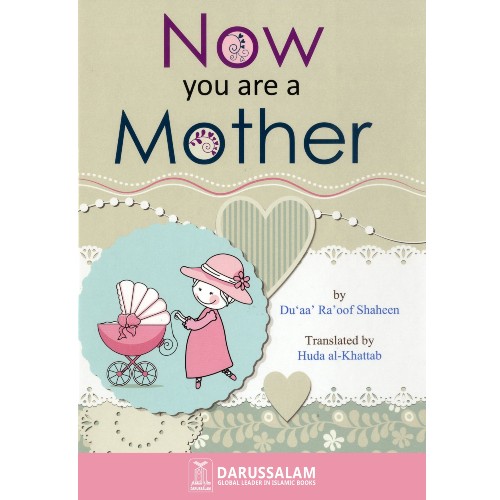
Now You Are A Mother (H/B)
This book has given an overview of the mother’s role and touched on the basics of raising babies and small children. Whilst motherhood is one of the most rewarding of roles, it is also a very complex role that brings many trials and challenges that cannot be covered fully in a single volume.
It is a very good preparation guide for expectant/expecting mothers who are pregnant/in pregnancy as it will teach many useful practical tidbits on how to prepare and what to expect. It is also a very good parenting guide book for concerned fathers/husbands who will also have take care of their children.
It is hoped that having read this book, readers will go beyond its parameters to learn all they can about how to care for their infants. In the teachings of Islam, the voices of experience provided by our own mothers and grandmothers, and the exchange of ideas and tips with other parents, new mothers can find guidelines to follow as they embark upon the journey of motherhood. The help and advice of doctors, public health nurses and other professionals may also be added to the mother’s “support system.”
Over and above all that, the Muslim mother can and must put her trust in Allah and seek His help and guidance.
The Life, Teachings And Influence Of Muhammad Ibn Abdul-Wahhaab (H/B)
From Chapter 1 – This book is not one with a political agenda. It is meant neither to support nor to critique any contemporary regimes or polices. Indeed, the driving force behind this work is much greater and more important than that. It has to do with, first, the religion of Islam as preached by the Prophet and second, with the honor and right of an individual Muslim, Muhammad ibn Abdul-Wahhaab. An attempt has been made to resent a fair and accurate presentation of the life and teachings of him. Conclusions were derived based only on the most historically and logically reliable, accurate, substantiated and proven-based sources – be they from Muslims or non-Muslims.
The Tree of Faith
In this book appropriately titled The Tree of Faith, Shaykh Abdur-Rahmân Nâsir as-Sa‘di discusses this amazing tree, its roots and branches and how to nourish and feed them for excellent growth. He goes into detail regarding the definition of faith, how it increases and decreases, and its amazing benefits.


There are no reviews yet.