


| Weight | 0.48 kg |
|---|---|
| Product Type | Book |
| Author | |
| Publisher | KUBE Publishing |
| ISBN | 9781847740434 |
Daily Wisdom :Islamic Prayer & Supplications (H/B)
RM75.00
Out of Stock

Highlights:
somdn_product_page
Compare
This beautiful presentation of Islamic prayers and supplications engages the reader in a moment daily reflection. With 365 prayers covering the whole year, this is a must for every home. An essential companion to the first two books in the Daily wisdom series..
Additional information
Reviews (0)
Be the first to review “Daily Wisdom :Islamic Prayer & Supplications (H/B)” Cancel reply
You must be logged in to post a review.
Related Products


Invocations & Remedy By Ar Ruqyah From The Quran And Sunnah (Leather / Medium Size)
5 ★
5 ★
1 Rating
5 ★
1
4 ★
0
3 ★
0
2 ★
0
1 ★
0
Highlights:
This is a medium-sized translation of the book, ‘INVOCATIONS AND REMEDY BY AR-RUQYAH’ by Shaykh SAID ‘ALI WAHF AL-QAHTANI رحمه الله .
In this work, the author meticulously compiled authentic invocations as well as remedies which pertain to Ar-Ruqyah from the Quran and Sunnah. He also discusses the best times and places for invocations to be accepted.
Shaykh Sa’id is highly regarded in this genre, with his famous book, ‘Fortress of the Muslim’ having been embraced by Muslims worldwide as a reliable source for daily invocations.
RM20.00

Prayers for Muslim Children (P/B)
Highlights:
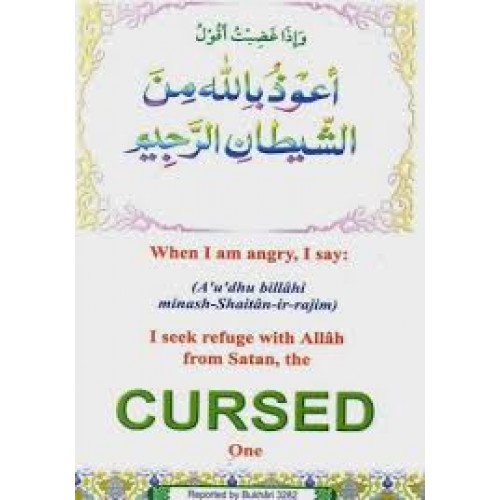
Full colour booklet of prayers for Muslim children. Includes English, Arabic, plus English transliteration for pronunciation. All the glorifications and praises are for ALLAH alone, and His countless Blessings be upon the last Prophet, Muhammad صلی الله علیه وآلهِ وسلم. To bring up a child under the blessings of ALLAH, it is necessary that from an early age we should introduce them to the ways of invoking our Lord, the Magnificent, the Beneficent.
All of the invocations, praises and mentioning of ALLAH presented in this book are related from the Sahih Ahadith of our beloved Prophet Muhammad صلی الله علیه وآلهِ وسلم. May ALLAH fulfil our wishes and make our efforts successful in this regard. Amin.
RM11.00


My Wudu Book
Highlights:
A step by step guide to perfecting your child’s Wudu according to the Quran and the Sunnah.
RM15.00


Prime Invocation from the Quran and Sunnah (Revised Edition)
Highlights:
This is a new presentation of the most useful dua’a booklet, with a very unique selection of supplications from the Quran and the Sunnah for various everyday use – including during the hajj and umrah. It also presents a simple yet very comprehensive guidelines, on HOW, WHEN and WHERE we can attain our dua’a to be accepted by the almighty Allah whom is The Giver and The Answerer.
RM17.00
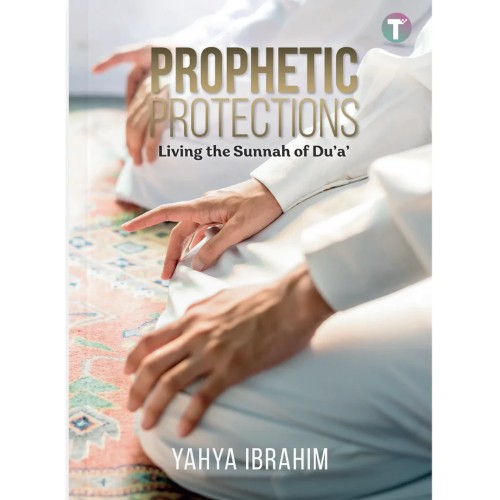

Prophetic Protections: Living the Sunnah of Du’a’ by Tertib
Highlights:
Comes with a pocket-sized duʿaʾ book that you can bring anywhere with you!
RM60.00


Fortress of the Muslim (Pocket Size)
5 ★
5 ★
1 Rating
5 ★
1
4 ★
0
3 ★
0
2 ★
0
1 ★
0
Highlights:
A Pocket size version of the widespread and well-known book FORTRESS OF THE MUSLIM by SA’ID ALI WAHF AL-QAHTANI رَحِمَهُ اللَّهُ.
An encyclopedia of authentic remembrances and Supplications that is needed by every Muslim on daily basis, this book is highly regarded and has achieved top recommendations from all eminent scholars across the Muslim world and has been translated into over 75 languages so far.
New and improved edition by Dakwah Corner Bookstore.

The Relief From Distress : An Explanation to the dua of Prophet Yunus (P/B)
Highlights:
Shaykh al-Islam Ibn Taymiyyah, may Allah sanctify his soul, was asked about the saying of the Prophet (pbuh),
The invocation of my brother Yunus, “none has the right to be worshipped save You; glory be to You, far removed are You from any imperfection; I have been amongst the wrong-doers,” none who is experiencing difficulty employs it except that Allah would relieve him of his difficulty.
What is the meaning of this du’a (prayer, supplication)?
Are their any unstated conditions that have to be met when one articulates it?
What is the connection between belief in the heart and the meaning of this supplication such that it leads to the removal of difficulty?
Why did he explicitly confess, ‘I have been amongst the wrong-doers’ when it is known that tawhid in itself leads to the removal of difficulty?
Is it sufficient to acknowledge ones’ sin alone, or must this be accompanied by repentance and the firm resolve not to repeat that sin in the future?
Why is it that difficulty and harm is removed only when a person relinquishes any hope, reliance and dependency upon the creation?
How can the heart relinquish the characteristic of putting hope in the creation and depending on them, and instead put its hope in Allah, Exalted is He, and turn to Him in its entirety?
What are the methods that would aid the heart in doing this?
The author replies to these questions in the form of this book.
RM117.00


Invocations Ar-Ruqiya (Pocket Size)
5 ★
5 ★
2 Ratings
5 ★
2
4 ★
0
3 ★
0
2 ★
0
1 ★
0
Highlights:
This book book is presented with translation for non Arab Muslims who are unable to understand the meaning in Arabic. This will help them to understand the meaning of these supplications which are taken from the Qur’an and the Prophet’s traditions. This will also help them to achieve an improved state in their worship of Allah.


Selected Invocations (Pocket Size) (P/B)
Highlights:
This small booklet has many excellent invocations to read during prostration, witr prayer, and at the end of Qur’anic recitation.


Zikr Morning, Evening & After Obligatory Prayers (Pocket Size) (REVISED)
5 ★
5 ★
1 Rating
5 ★
1
4 ★
0
3 ★
0
2 ★
0
1 ★
0
RM10.00
Recently Viewed

In Pursuit of Allah’s Pleasure
Highlights:
In this book the authors outlined a complete methodology for Islamic work today. From `Aqeedah to Da’wah, Jihad to Khilafah and Taqwa to Sabr (patience), they explained how all of these parts of Islam come together for the sole objective of each and every Muslim: to seek the Pleasure of Allah ( SWT ), the Irresistible. It was written in a manner portraying the true situation of the Muslims today and, coming from imprisoned scholars: a realistic portrayal.
This book is an excellent read by itself and an even better guide if used as a syllabus in learning Islam in an organised, collective manner. It is ideal as a basis for study circles and acts as a comprehensive manual. Coupled with the supplementary reading of some other books in the English language and memorisation of the Holy Quran, it can consolidate the knowledge of anyone seeking to work for Islam in this day and age.
Contents
Preface
Introduction
Part One: Our Ultimate Goal
Part Two: Our `Aqeedah
Part Three: Our Understanding
Part Four: Our Aim
Part Five: Our Path
Part Six: Our Provisions
Part Seven: Our Walaa’ (Loyalty)
Part Eight: Our ‘Adaa’ (Animosity)
Part Nine: Our Gathering
Glossary of Arabic Trems
The Twentieth Century has witnessed one of the fiercest blows inflicted upon our Ummah by our enemy: the collapse of the Khilafah. If only their conspiracy had stopped at the demise of Khilafah. But they went on to indoctrinate Muslims with strange, foreign ideas and concepts, in order to confuse our understanding of our Deen. Once we wake up and try to return to our original Deen, we will be confronted with an intellectual perplexity, in which evil and good is mixed. Hence, the truth will be ambiguous and we will go astray, and lose the true understanding of Islam.
And hold fast, all of you together, to the Rope of Allah (this Qur’an) and be not divided among yourselves.” [Surah Ale-Imran (3), Ayah 103.]
by Dr. Naahah Ibrahim, Asim Abdul Maajid and Esaam-ud-Deen Darbaalah
RM53.00

Kindness to Parents
Highlights:
Kindness to Parents is a very enlightening booklet by Abdul Malik Al-Qasim. He has collected several stories and narrations that demonstrate the Birr (being dutiful) and kindness to our righteous Salaf towards their parents’ needs and necessities, in obedience to Allah’s worship in sincerity. He refers from the Noble Qur’an that a man is never allowed to say ‘Uff” (fie) if he smells a bad order coming from his parents or one of them.
The author has exposed shortcomings and errors of many among us who don not preserve the rights of their parents.
RM17.00

Philanthropy and Social Justice in Islam (P/B)
Highlights:
This book analyses the principles and practices of philanthropy and distributive justice in Islam. It argues, with analyses and examples, that the accomplishment of purposive philanthropy, as commanded by the fundamental tenets of Islam, through the professionalization and rationalization of zakat management, modernization of awaqaf, etc. has the potential of optimizing justice in Muslim societies. The work draws on the Quran, Hadithe, other authentic literature, and also on official documents and publications of management agencies dealing with philanthropy in different Muslim countries/societies. The analyses are documented enough to be used as a text for the study of philanthropy in Islam in tertiary institutions nonetheless are simple enough to draw general readership and to be used by non-profit and international organizations worldwide in order to order to understand the principles and issues of philanthropy and distributive justice in Muslim societies.
RM40.00
There are no reviews yet.