


| Weight | 0.47 kg |
|---|---|
| Product Type | Book |
| Author | |
| Publisher | Al-Kitaab & as-Sunnah Publishing |
| Pages | 245 |
| ISBN | 9781891229237 |
Festivals & Celebrations In Islam
5 ★
5 ★
1 Rating
5 ★
1
4 ★
0
3 ★
0
2 ★
0
1 ★
0
$11.59
Hurry up, Only 3 left.
Highlights:
somdn_product_page
Compare
Festivals and celebrations are occasions of joy and happiness. They have their distinctive spirit in all societies and cultures, and are eagerly awaited and heartily welcomed by everyone.
The feeling of excitement associated with these occasions, however, causes people to introduce uncommon, strange or even bizarre practices during them.
Islam regulates the occasions to be celebrated and the methods of celebrating them. It maintains their atmosphere of happiness, while redirecting
This book discusses the two annual Islaamic festivals: Eid ul-Fitr and Eid ul-Adhaa as well as the weekly Jumu’ah. It presents the Islaamic guidelines for celebration according to the Quraan and Sunnah, and warns against innovated occasions and un-Islaamic festivals.
In addition to topics that are standard to ‘Id celebration, such as the ‘Id prayer and khutbah, and ‘Id pastimes, this book discusses zakat-ul-fitr, the sacrifice, the blessed days of the month of Thul-Hijjah, and numerous other ‘Id-related issues.
The broad and thorough discussions in this book make it an important manual and complete reference on festivals and celebrations in Islam. Indeed, from Allah (swt) we seek help and acceptance.
Additional information
Reviews (1)
5 ★
1 Rating
5 ★
1
4 ★
0
3 ★
0
2 ★
0
1 ★
0
Add a review Cancel reply
You must be logged in to post a review.
Related Products

Golden Stories of Accepted Prayers
5 ★
5 ★
1 Rating
5 ★
1
4 ★
0
3 ★
0
2 ★
0
1 ★
0
Highlights:
What are invocations? In a real sense these are requests which come from the bottom of our hearts to Allah Almighty. Allah is always ready and happy to receive prayers from anyone at any time.
If you’re facing any difficulties or trouble you should immediately turn to Allah for help. The best invocations are those narrated by the Prophet (S). If you don’t speak Arabic, you can pray in your mother tongue.
When we pray we should feel assured that Allah will accept our requests. We should do so with complete sincerity and devotion.
Prayers can be made at any time, but there is a greater possibility our prayers will be accepted if we do so at specific times.


33 Ways of Developing Al-Khushoo`: Humility and Devotion in Prayer
5 ★
5 ★
1 Rating
5 ★
1
4 ★
0
3 ★
0
2 ★
0
1 ★
0
Highlights:
Shaykh Muhammad Salih al-Munajjid’s little book is perhaps one of the most widely-circulated among Muslims today. This is because the topic touches worshippers where it hurts—we know that we often lapse into an automatic sort of prayer when we lose concentration. The Shaykh points out that this loss of concentration really stems from a lack of humility and devotion—in Arabic, khushoo‘. His aim in writing this book is to help us to get back that khushoo‘. His step-by-step approach makes it simple. He gives practical advice and uses the excellent example of the prayer of the Messenger of Allah (blessings and peace be upon him) to guide us, so that as worshippers, we can truly return to a state of humility and devotion before the Lord.


Backbiting and Its Adverse Effects
4 ★
4 ★
1 Rating
5 ★
0
4 ★
1
3 ★
0
2 ★
0
1 ★
0
Highlights:
This is a revised and updated edition of Backbiting (formerly entitled Gossip and its Adverse Effects). The translator, Huda Khattab, explains: The Qur’an states: {…nor speak ill of each other behind their backs. Would any of you like to eat the flesh of his dead brother? No, you would abhor it…} (Qur’an 49: 12) We cannot escape the fact that backbiting affects us all. We have all been victims and, we must be honest, we have all been guilty of this sin. But it is not a matter to be taken lightly; backbiting can wreck lives and shatter communities. Islam is a practical faith that recognizes the human condition and offers achievable remedies to the problems that beset us. Every human society faces the problem of backbiting, and Islam shows us how to tackle it in a sensible and humane manner. Husayn al-Awayishah has researched this topic in depth, and has presented a concise guide to the evils of backbiting and what can be done about it. This book may make for uncomfortable reading, but the topic is one that every one of us has to face up to.

Governing Yourself and Your Family
5 ★
5 ★
1 Rating
5 ★
1
4 ★
0
3 ★
0
2 ★
0
1 ★
0
Highlights:
The subject matter of this work has preoccupied and continues to preoccupy the minds of our Nation?s members; yet in spite of this preoccupation, many people lack a correct understanding regarding it. Because the issues that fall under the subject matter of this work are so important, I decided to write this work, through which I hope to make plain the way to live and act according to what Allah has revealed.
Contrary to what some may think, this work is relevant not just to leaders, but to every individual as well. Each and every human being is a leader and chief of sorts, for just as a ruler is responsible for the welfare of his state and citizens, each one of us is responsible for his flock ? the members of his family and, more importantly, his own self?

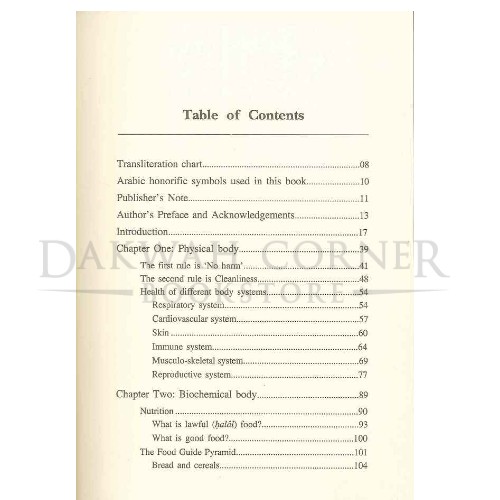
Healing Body and Soul : Your Guide to Holistic Wellbeing Following Islamic Teachings
5 ★
5 ★
1 Rating
5 ★
1
4 ★
0
3 ★
0
2 ★
0
1 ★
0
Highlights:
Like other guides to good health, Healing Body & Soul advocates abandoning an unhealthy diet and altering a sedentary lifestyle, but this book goes beyond the mere physical aspects of health. Amira Ayad is a practitioner and researcher with a Master’s in Pharmaceutics and pursuing her Doctorate in Natural Health. She writes: During the course of this work, I try to explain how you can combine the rich tradition of Islamic teaching with beneficial contemporary scientific knowledge in order to lead a holistically healthy and happy life. The book is divided into five chapters, each concerning one of the five components that make up your body, mind and soul, clarifying in each chapter how to look after that part of you and keep it healthy. During the course of the book you will notice how these bodies are interconnected; the health of one is highly dependent on the wellbeing of the others, so that a happy, healthy life entails a balance between all of them. Healing Body & Soul presents holistic Islamic health science in a simple yet comprehensive user-friendly guide to better health. Healing Body& Soul is an invaluable reference that encourages and empowers people to take control of their health and their lives.


50 Candles To Light Your Path (P/B)
5 ★
5 ★
2 Ratings
5 ★
2
4 ★
0
3 ★
0
2 ★
0
1 ★
0
Highlights:
One goal brings them together : how to improve the well-being of our sons and daughters, how to aid them towards threading the path of guidance to engender their excelling in their academic, work and other facets of life.


Difference Between Advising And Shaming ( Dar as-Sunnah)
4.5 ★
4.5 ★
2 Ratings
5 ★
1
4 ★
1
3 ★
0
2 ★
0
1 ★
0
Highlights:
[This book] beautifully illustrates the difference between advising that is encouraged and shaming that is not permitted.


One Hundred Pieces of Advice
3 ★
3 ★
1 Rating
5 ★
0
4 ★
0
3 ★
1
2 ★
0
1 ★
0
Highlights:
One hundred treasured advices extracted from the writings of the illustrious scholar, Imām Ibn al-Qayyim (may Allāh have mercy upon him): Ten ways to acquire Allāh’s love Ten ways to be patient and avoid sins Ten ways to be patient during a calamity Ten benefits to lowering your gaze Ten ways sins are expiated Ten barriers between the slave and his Lord Ten reasons knowledge is not put into action Ten ways to open your heart Ten ways to protect against envy Ten ways to protect against the plots of the Shayṭān


A Child Reads (Successful Family Upbringing Series-06)
Highlights:
A Child Reads (Successful Family Upbringing Series-06)


30 Ways To Attain Happiness (3rd Edition)
5 ★
5 ★
1 Rating
5 ★
1
4 ★
0
3 ★
0
2 ★
0
1 ★
0
Highlights:
This great book is guidance for all especially the Muslims society in our daily life as it present the ways of dealing with the daily life cycle, accepting the pasts and bracing for tomorrows based on the teaching of the Qur’an and Sunnah


Change or Lose
5 ★
5 ★
1 Rating
5 ★
1
4 ★
0
3 ★
0
2 ★
0
1 ★
0
Highlights:
Motivational & Manners
Change is not an easy and insignificant issue. It needs a deep insight and vision as much as will and determination. It is important here to realize that we can’t achieve all what we want and desire. Furthermore, getting what need and desire may not always be in our interest. This, of course, requires two things from us:


15 Ways to Increase Your Earnings from the Quran and Sunnah (P/B)
5 ★
5 ★
1 Rating
5 ★
1
4 ★
0
3 ★
0
2 ★
0
1 ★
0
Highlights:
One of the blessings that Allah has given His servants is that of a convenient means of financial exchange, i.e. money. Money has since grown to become one of the most’ prized possessions of mankind, and like so many elements of the dunya, serves to test the obedience of Allah’s servants by challenging their system of priorities… Therefore, due to the fact that the Muslims of today are preoccupied with the seeking of money to an extent almost unparalleled in Islamic history, I felt the need to compile a short treatise explaining the manner in which Allah and His Messenger described how Muslims could increase their money. The focus of this book is upon encouraging Muslims to procure money through halal means, and to abstain from haram gains. Abu Ammaar Yasir Qadhi was born in Houston, TX, but completed his primary and secondary education in Jeddah, Saudi Arabia. He graduated with a B.Sc. in Chemical Engineering from the University of Houston, after which he was accepted as a student at the Islamic University of Madinah. After completing a diploma in Arabic, he graduated with a B.A. from the College of Hadith and Islamic Sciences. He is presently doing an M.A. in Islamic Theology (‘aqidah) from the College of Da’wah at the University. Of his published works are: Riyaa: Hidden Shirk; An Introduction to the Sciences of the Qur’an; An Explanation of the Four Principles of Shirk;Du’a: The Weapon of the Believer; and others.
Recently Viewed


Al-‘Ubudiyyah: Being a True Slave of Allah
5 ★
5 ★
1 Rating
5 ★
1
4 ★
0
3 ★
0
2 ★
0
1 ★
0
Highlights:
Shaykh Ibn Taymiyyah defines the concept of worship in Islam and explains that to be a true “slave of Allah” is a status of both virtue and nobility. The title “slave of Allaah” is one of great honor which Allah bestowed upon the best of creation, Muhammad (SAW). Ibn Taymiyyah highlights the prevalent traps which people fall into, when becoming enslaved by, or allowing their hearts to become attached to worldly objects. The emphasis is on servitude to Allah which is adorned with the true love we hold for Him in our hearts — a matter of central importance for every Muslim.
Highly Recommended for the young blooded who Want to Run before they can Walk and even the Old timers ‘Who sometimes are so comfortable Walking that they have forgotten that there is sometimes a need to run’ in the Path Towards Allah.

Riba: Usury or Interest
Highlights:
The Noble Qur’an states: {… Fear Allah, and give up what remains of your demand for usury/interest, if you are indeed believers. If you do not do so, then take notice of war from Allah and His Messenger.} (Qur’an 2: 278-279) Despite this obvious prohibition, the practice of ribâ (usury and interest) has polluted the global economy completely. This booklet explains the awful consequences of dealing in usury and interest in a summarized but convincing manner.
$1.82 $2.05
au.mu.smj –
This is a very beneficial book . every home should have this book.