| Weight | 0.62 kg |
|---|---|
| Product Type | Book |
| Author | |
| Publisher | Darussalam |
| Pages | 440 |
| ISBN | 9789960980300 |
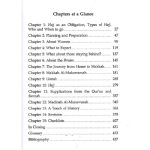
Getting the Best Out of Hajj
$17.05
The book provides a realistic view of Hajj as it is today, with detailed explanations of all the rites. It provides Figh related issues about Hajj, Salah and personal behaviour according to the Quran and Sunnah, to enable you to obtain the best value for your time spent in the holy cities. It also provides information and suggestions about planning for the journey, what to expect and how to survive, so you can depart with full confidence. This is a must have for all those planning to go on Hajj!
Be the first to review “Getting the Best Out of Hajj” Cancel reply
You must be logged in to post a review.
Related Products
The Ruling concerning the Celebration of Mawlid an-Nabi
In this book, is an explicit CLARIFICATION of the MAJOR DOUBTS raised by the proponents of Mawlid an-Nabi, including;
- Mawlid an-Nabi is honoring the Prophet.
- Mawlid an-Nabi is celebrated by a large number of people in many towns and cities
- Commemorating Mawlid an-Nabi renews the memories of the Prophet
- Celebration of Mawlid an-Nabi is out of love for the Prophet and and an expression of one’s love, which is permissible.
- awlid an-Nabi is a Bidah Husna (good innovation) because it is a means of showing gratitude towards Allah for sending the Prophet.
- The saying of Umar, ‘What a good Bidah is this?’
Additional quotes by Shaikh Muhammad ibn Ibraheem Aal-Shaikh have been added to further clarify these issues.
The booklet also has 2 valuable appendixes:
Appendix 1: Explanation of the Hadeeth, “He, who establishes/initiates a Sunnah Husna in Islam, ” in the words of Shaikh Sales al-Fawzan and Shaikh Muhammad ibn al-Uthaimeen (rahimahullah)
Appendix 2: A Dialogue between Shaikh al-Albaani (rahimahullah) and a proponent of Mawlid.
The Concise Presentation of the Fiqh of the Sunnah and the Noble Book
Written by Dr. Abdul-Azeem Badawi and translated by Jamal al-Din M. Zarabozo, The Concise Presentation of the Fiqh of the Sunnah and the Noble Book covers the fiqh of diverse topics like purity, prayer, fasting, zakah, pilgrimage, marriage, business transactions, foods, inheritance, criminal offenses, and jihad. Dr. Badawi relies only on the Quran and the Sunnah, making it an authentic Islamic book on fiqh and a collection of sound hadiths.
Fiqh According To The Quran & Sunnah (2 vol)
The complete set, ‘Al-Lubab Fee Fiqh As-Sunnah Wal-Kitab,’ contains all of the books of Islamic Fiqh and its chapters, accompanied by evidence and is presented in a clear and simple manner, in order that they may be understood by the young and the old, without blindly following any of the schools of Jurisprudence, but rather being subject to authentic proofs and following the most authoritative opinions, without fanatical adherence to any particular group. Rather the author agrees with each group when the truth is with them and contradicts them when they veer from that which is correct.
Fiqh is to achieve access to knowledge of that which is unclear through knowledge of that which is proven, so it is more specific than mere knowledge or learning. And fiqh is knowledge of the juristic law. It is said Faquha -A man has acquired understanding and so he has become a Faqeeh (A scholar of Islamic Jurisprudence); and it is said Faqiha – He has understood it, i.e he has attained understanding of it, and it is said Tafaqqaha – he has devoted himself to the acquisition of (Islamic) Knowledge and specialized in it. Fiqh has been a subject of contention among the scholars as well as layman throughout the history of Islam.
Fast According to the Quran & Sunnah
Saum (Fast) is a third Pillar of Islam. Allah’s Messenger said, Allah says: “Every deed of the son of Adam is for him, except Saum (fasting). It is for Me and I shall reward for it.”
As the status of this act of worship is so high it is essential to learn the pilings pertaining to this month of fasting so that Muslims will know what is obligatory in order to do it, what is forbidden to avoid it, and what is permissible so that they do not unnecessarily subject themselves to any hardship by depriving themselves from it.
This book consists of all the main issues of Fast. The main objective of this work is to serve an easy and authentic reference to the reader.
Fiqh Course: Tahaarah, Salaah & Janaa’iz
This course was compiled for English-speaking Muslims and is especially beneficial for new Muslims. It covers tahârah (purification), salâh (prayer) and janâ‘iz (funerals). It is set out in an easy-to-understand manner, citing evidence from the Qur’an and authentic hadiths. The aim of this book is to provide the reader with a correct, yet uncomplicated guide to the performance of the aforementioned acts of worship. Allah willing, it is the first in a series which will cover all aspects of worship and Islamic jurisprudence.
The Problems of the Illegitimate Child (P/B)
This book addresses the views of the Sunni scholars regarding the importance of genealogical relationship (nasab) in Islamic family law and examines the role of legitimacy on the basis of the legal maxim “al-walad li al-firash”, evidence (al-bayyinah), and doubtful intercourse (wat’ shubhah). It also elucidates the views of the Sunni schools of law on how to establish illegitimacy. For the Sunni jurists, there are several situations that determine the illegitimacy of the child. A child is considered illegitimate if its birth is the outcome of adultery (zina) or the result of legitimate union but accompanied with imprecation (li‘an). Other circumstances include the birth of the child taking place in less than six lunar months, the father of the child being categorized as one who is incapable of begetting, or the birth as a result of marital relationship considered unlawful because of consanguinity. The book also deals comprehensively with the moral, religious, legal and other aspects of the illegitimate child and the foundling in the works of the Sunni jurists. The status and rights of the illegitimate child and the foundling in the Islamic family law of Malaysia and Brunei are also discussed by referring to some provisions from Federal Territory Act 1984 (Act 303) and Brunei law.
Forensic Psychiatry In Islamic Jurisprudence (P/B) (IBT)
This is the first book in Forensic Psychiatry that focuses on the application of psychiatry to legal issues connected to Islamic jurisprudence. It gives contemporary psychiatry in any Islamic country a broad spectrum of tools to work with, enabling the utilization of options specific to particular societal and cultural norms. This book will appeal to both the general as well as the academic reader.
Smoking Intoxicants & Narcotics (P/B)
This book deals with the epidemic of smoking, which enslaves many of today’s Muslims, and which is aggravated by that most victims belittle its dangers and deny its prohibition.
This book includes a discussions of intoxicants, establishing the prohibition of various practices associated with them, as well as penalties (in both lives) for those who partake in them.
This book also includes a discussion of narcotics, with an overview of marijuana and qaat (or khat). Based on their established effects and harms, we conclude that narcotics are strongly prohibited, except in very limited medical settings.
This book, we hope, will provide many Muslims with guidance toward a healthier, cleaner and worthies Islamic personality. My Allah grant us guidance and facilitation.
The Right to Education, Work and Welfare in Islam (P/B)
In The Right to Education, Work and Welfare in Islam Professor M.H. Kamali develops an Islamic perspective on three connected and complementary areas of rights and liberties. He urges that education is often a necessary ingredient of professional work even more so now than in earlier times when the range and variety of specialised knowledge were relatively limited. A person who acquires education, whether generally or at advanced levels of specialisation, is more likely to stand in a better position to enter the workforce and thus to contribute to the welfare of the community.
The author commences his discussions on education, work and welfare in Islam by focusing on how each is treated in the Qur’an; and follows this by the example of the Prophet and, after him, the Pious Caliphs who gave prominence to the education and welfare needs of people at times both of scarcity and affluence. Professor Kamali then moves forward to our time and discusses the right to education, the education of children, institutionalisation of learning, academic freedom and the debate between science and religion.
The section on work elaborates on the value of work, work ethics, workers’ and employers’ rights and responsibilities, and the role and responsibility of governments.
Finally, the section on welfare focuses on the importance in Islam of caring for those who are in need and the different forms of provision that can be made available by individuals, the state and charities.
A Guide to Male-Female Interaction
Are Muslim men allowed to interact with female students, and vice versa, in a virtual classroom? Can a Muslim woman pursue a professional career that necessitates her interaction with men? Is it appropriate for a woman to serve her husband’s guests? Do mixed wedding ceremonies comply with the Sharia? Read this bilingual book to find the answers and more!
The Ultimate Guide to Umrah by Darussalam
Islamic Fatawa Regarding Women (H/B)
Women face a lot of special problems regarding their menses, postpartum bleeding, istihada, hijab, mixing with men, rights & duties with respect to their husband, husband’s household, children, inheritance, marriage, divorce, etc
More than 350 of such problems & issues have been answered in this book by Grand Mufti of Saudi Arabia Sheikh Ibn Baz, and the eminent scholars like Sheikh Ibn Uthaimin, Sheikh Ibn Jibreen and others.
.
Recently Viewed
Sharh Al-Aqeedat-il-Wasitiyah (H/B)
Sheikh-ul-Islam’s book Al-Aqeedah-il-Wasitiyah deals with the perfect and undefiled Islamic Faith and Creed of the As-Salaf-As-Salih (the pious predecessors) particularly in regards to Allah’s names and attributes, with solid arguments in brief words and terminology. The book is highly appreciated by the scholars for its brevity as well as comprehensiveness; and for its contents produced perfectly in line with the Qur’an and Sunnah in an appealing and manifest manner.
The eminent scholar of Islam, Sheikh-ul-Islam Imam Ibn Taimiyah, discusses the real & original faith of Islam according to the Qur’an & Sunnah. The real faith in Allah and his religion Islam is to follow the Qur’an and Sunnah strictly. Any scholar who adds or attributes or alters any basic fundamental of Islam is wrong & deviates from the teachings of Islam. Every Muslim must read this book to get the real light of Faith.
( FREE-eBook) Secrets of Dialogue and Persuasion
Dialogue is the girdle of the intelligent and the habit of the wise. Dialogue has the greatest influence on humans during interactions and is the loftiest method of enlightenment and preaching. Dialogue is like engraving; it engraves on the souls and leaves lasting impressions on the character of the audience.
After the advent of prophethood, our beloved Prophet Muhammad (Sallalahu Alayhe Wassalam)stayed in Makkah for thirteen years without engaging in physical combat with the non-believers, he did not raise a spear nor unsheathe a sword. He was persistently dialoguing with the people of Makkah for thirteen years !
Dialogue was a well established signpost, clearly seen at every stage of the life of the Prophet (Sallalahu Alayhe Wassalam) and at the different points of his call. The most beloved speech to the people and endearing to their hearts, the most easily accepted by them is that which comes in the form of a conversation in which the listener, the addressee, contributes in speech with his tongue and reasoning while employing his intellect.
Secrets Of Dialogue and Persuasion : The Loftiest Dialogues and Most Powerful Methods Of Persuasion From The Life Of The Best Men صلى الله عليه وسلم is a study of the dialogues of our beloved Prophet Muhammad (Sallalahu Alayhe Wassalam) while inviting to the path of Allah SWT.
- How did he communicate his message to the World’s superpowers at the time, considering the and community in which he lived ?
- What responses did he receive and what lines of action did he follow?
- How did he persuade the youths and adolescents to accept his message ?
- How did he converse with his household, including the women and children ?
- What were the major elements of his dialogues that yielded the best results ?
( E-Book) Stop Worrying & Start Living
This book seeks to guide and make ease to the grieving and despondent souls who are in a quagmire of vexation in a manner that varies from other typical motivational books that discusses on worry, sadness and grief; and from those which discuss fortune (or success). It addresses to the endogenous core of the heart and soul, correlating it with Faith, showing and making distinct of what the aspects of Faith has to do with a person’s well-being. It removes the obscurities and perplexities that binds the heart and soul of many of the children of Islam. Those whom Shaytan invites to wretchedness, sin, despair, grief and hopelessness in the Mercy of Allah.
Abdullah bin Sa’eed Safar Al-Husnee Az-Zahranee captures 40 ways to dispel and eradicate sorrow and grief and to gain a happy and pleasant living. It explains how you adjust in difficult situations so that you hand out to us from it flower, rose and jasmine!
Scholars of Hadith (P/B)
This book presents an extensive, in-depth analysis of great Muhaddithun (scholars of the science of Hadith). Each chapter presents detailed biographies of Malik b. Anas, Ibn Hanbal, al-Bukhari, Muslim, al-Tirmidhi, Abu Dawud, an-Nasai, Ibn Majah, ad-Darimi and al-Bayhaqi along with the methods they used in Hadith collection and classification. This work is especially important in today’s world where many Muslims have a dire need to connect with the great corpus of work that was produced by the scholars or traditional Islam. A work such as Scholars of Hadith has been long overdue in the English language and it will certainly make for productive reading for all interested in deepening their knowledge of Islam.


There are no reviews yet.