




![[AH] Al Umdah Fi Al Ahkam / العمدة في الأحكام](https://www.dakwahbookstore.com/wp-content/uploads/2026/04/website-500x500-23.jpg)
![[AHS] Al Tarikh Al Andalusi Min Al Fathul Islami / التاريخ الأندلسي من الفتح الإسلامي حتى سقوط غرناطة](https://www.dakwahbookstore.com/wp-content/uploads/2026/04/website-500x500-26.jpg)


In the second part, they will read stories about good behavior and understand the noble qualities advocated by the Holy Quran. In the final part, they will see how the heroes in our stories try to correct bad behavior, again relying verses from the Quran.
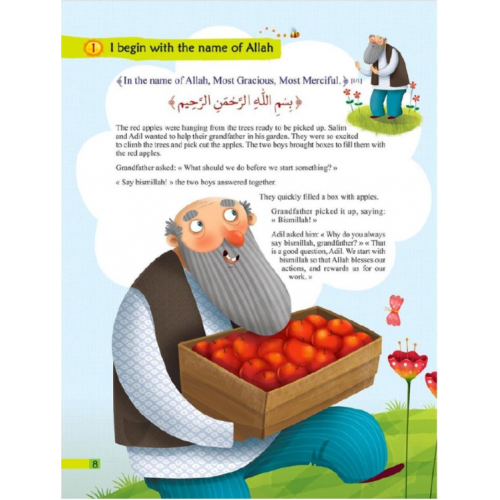
Each verse is illustrated with a fun, meaningful story and a clear teaching. Learning and understanding Allah’s verses has never been so easy and pleasant.




au.mu.smj –
This is a must have for every Muslim family with kids . The language is so easy to understand . Plus in some verses it does not only interpret the meaning but also tells the story behind it . I actually ordered more of it to give it as gifts to other Muslim families .
Waah.SN –
This is a good introduction for young kids regarding how the verses of the Quran can be applicable in our behaviour, with little stories that are relatable to us older ones and kids’ day-to-day lives. The language is simple and easy, accompanied by colour-popping pictures. Though some pages may be hard to read because the paragraphs are too near to the bindings of the book, but just open the book wide anyway 😀
Insaida –
Kids like the colourful pictures. The stories are very simple and short. The fonts may be a bit small, so it helps to read along with them.