| Weight | 0.10 kg |
|---|---|
| Dimensions | 21 × 16 × 1 cm |
| Product Type | Book |
| Author | |
| Publisher | IIPH |
| Pages | 64 |
| ISBN | 9789960850306 |


Problems and Solutions (IIPH)
$2.05 $1.43
What should I do if I miss the fajr prayer? What are the consequences of excessive laughter? How should I deal with insinuating thoughts from Satan? How can I control my bad temper? What is so bad about staying up late night after night? Drawing on the great guidance of the Qur’an and the Sunnah, Shaykh Muhammad Sâlih al-Munajjid answers these questions and more, giving informative explanations and practical solutions to help you improve in your worship and in your performance of everyday activities.
Be the first to review “Problems and Solutions (IIPH)” Cancel reply
You must be logged in to post a review.
Related Products
Scientific Signs In Prohibiting Flesh of Swine (P/B)
Scientific Signs In Prohibiting Flesh of Swine
Tolerance In Islam
This short book examines the concept of tolerance in Islam. The Arabic word that is translated in English as ‘tolerance’ encompasses a much richer meaning than the idea of putting up with something grudgingly. It conveys a reciprocal sense of generosity, forgiveness, ease and smoothness.
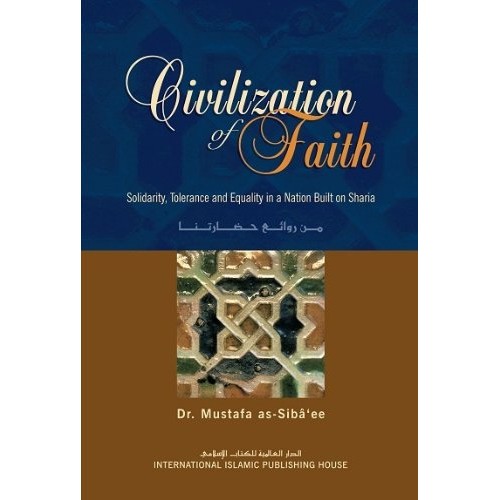
Civilization of Faith (IIPH)
We are living at a time when western civilization is at its peak and the Muslim nations are at their weakest point. They are dazzled by the power of the west with its wealth, scientific discoveries and technological advantages. Those who are unfamiliar with history might be unaware that this has not always been the case. A few hundred years ago, it was just the opposite. The Muslim Ummah was the superpower of the age, and Muslims were leaders in culture, science and technology. The cities of the Muslim world were the centres of learning to which people came from far and wide. The Muslims, at one time, were the most technologically-advanced civilization on the earth. The uniqueness of their civilization lay in the fact that, although they achieved a great deal in materialistic terms, they remained a compassionate society where the poor and disadvantaged were cared for. This book is a reminder to Muslims that they have a glorious past; for many centuries, they had the upper hand over their enemies. They became masters of the world when they adhered to Islam; however, when they became preoccupied with worldly gain and the pursuit of luxury, decline set in. Today, if Muslims take their religion seriously, they will once again be supported by Allah, the Exalted, and lead the world in all spheres of life. Nasiruddin al-Khattab has translated this thought provoking book into English. The hardcover version of this book that we have for sale is the revised 3rd edition, published in 2011.
$3.02 – $4.14Price range: $3.02 through $4.14
Fatawa-fatawa Tentang Wanita (H/B)
Buku ini merupakan kumpulan fatwa-fatwa pilihan yang berkaitan dengan masalah wanita, yang dihimpun dari fatwa-fatwa Syaikh Abdul Aziz bin Baz, Syaikh Muhammad al-Utsaimin, Syaikh Abdullah al-Jabrain, dan fatwa-fatwa Lajnah Da’imah lil-Ifta’. Buku ini penting dimiliki setiap muslimah, karena di dalam buku ini terdapat jawaban-jawaban atas persoalan-persoalan yang dihadapi atau dialami oleh wanita muslimah dalam kehidupannya, di mana banyak dari persoalan-persoalan tersebut yang tidak didapatkan jawabannya dalam buku-buku klasik.
This is the Indonesian translation of Fatawa: Rulings for Muslim Woman. Acquiring knowledge of Islam is incumbent upon every Muslim – male and female – in order to live one’s life according to the commands and recommendations of the Qur’an and the Sunnah of Allah’s Messenger (blessings and peace of Allah be upon him). Naturally, women have some specific issues that concern them and that are different than those that concern all Muslims or only men. In this book, these rulings, or fatâwa, have been compiled from the religious verdicts of well-known and respected Islamic scholars, both past and present — Shaykh ‘Abdul-‘Aziz ibn Baz, Shaykh Muhammad ibn ‘Uthaymeen, Shaykh Ibn Jibreen, and the Standing Committee for Scholarly Research and Issuing Fatwas (Saudi Arabia). The rulings are derived from the Qur’an and the Sunnah. The rulings were compiled in this book by Muhammad al-Musnid and translated into Indonesian/Malay by Uril Bahruddin. This book is a compendium of such rulings in a question-and-answer format, catering to the special needs of the Muslim woman. It is a concise and readily accessible reference, and an invaluable addition to the Muslim woman’s personal library.
Wahhabi Islam From Revival And Reform To Global Jihad
Until September 11, 2001 few Westerners had ever heard of “Wahhabism.” Now most of us recognize the word as describing an austere and puritanical type of Islam, mentioned frequently in connection with Osama bin Laden and Saudi Arabia and often named as the inspiration behind the 9/11 terror attacks. The word “Wahhabi” stems from the name of the founder of this system of thought, Muhammad Ibn Abd al-Wahhab (1702-1791), companion and religious adviser to Muhammad Ibn Saud, founder of the House of Saud. In this book Natana DeLong-Bas offers an in-depth study of the written works of al-Wahhab. She focuses on four areas: theology, legal theory, proselytizing through education and jihad, and law on women. Through a close reading of al-Wahhab’s texts she demonstrates that many aspects of 20th- and 21st-century Wahhabi extremism do not have their origins in his writings. Examples of this extremism include the emphasis on jihad, martyrdom and militancy, and misogyny. The strict division of the world into dar al-Islam and dar al-kufr, according to which only Wahhabi adherents are considered to be true Muslims and all others are non-Muslims who must be fought, is entirely absent from al-Wahhab’s work. Instead, argues DeLong-Bas, all of these themes were only added to Wahhabi teachings in the 19th century following armed engagement with the Ottoman Empire. DeLong-Bas’s study fills an enormous gap in the literature about Wahhabism by returning to the original writings of the founder of the movement. She debunks the common journalistic portrayal of Muhammad Ibn Abd al-Wahhab as an illiterate, rural bumpkin with no scholarly formation. Her revisionist reading of al-Wahhab’s thought will be controversial but impossible to ignore. The book will be essential reading for students and scholars of Islam as well as for those interested in the background of this dangerous modern ideology.
The Ruling Concerning the Celebration of Mawlid an-Nabi (2nd edition)
In this book, is an explicit CLARIFICATION of the MAJOR DOUBTS raised by the proponents of Mawlid an-Nabi, including:
- Mawlid an-Nabi is honoring the Prophet.
- Mawlid an-Nabi is celebrated by a large number of the people in many towns and cities.
- Commemorating Mawlid an-Nabi renews the memories of the Prophet.
- Celebration of Mawlid an-Nabi is cut of love for the Prophet and an expression of ones love, which is permissible.
- Mawlid an-Nabi is a Bidah Husna (good innovation) because it is a means of showing gratitude towards Allah for sending the Prophet.
- The sayings of Umar, ‘What a good Bidah is this?’
Additional quotes by Shaikh Muhammad ibn Ibraheem Aal-Shaikh have been added to further clarify these issues. The booklet also as 2 valuable appendixes:
Appendix 1: Explanation of the Hadeeth,”He, who established/initiates a Sunnah Husna in Islam.” in the word o Shaikh Saleh al-Fawzan and Shaikh Muhammad ibn al-Uthaimeen (rahimahullah)
Appendix 2: A Dialogue between Shaikh al-Albani (rahimahullah) and a proponent of Mawlid.
A Mercy to Humanity
A Mercy to Humanity is a truly unique study of the Prophet’s (SAW) biography in which Dr. Aid al-Qarni paints a vivid picture of his noble character, delivering a personal insight into the events of his life. It is an emotional and engaging commentary that includes the author’s thoughts and reflections on the subject.
Making Sense of the Portents of the Hour (H/B) – IIPH
Are things inevitably getting worse and worse, year after year, century after century, with no way to alter the course of events? Is the Muslim Ummah doomed to experience failure and humiliation until the Mahdi arrives? Will he restore its former glory and bring victory over all its enemies? Are all our efforts to support Islam destined to end in failure? Instead of taking action, should we simply wait for the return of Jesus (peace be upon him) towards the end of time? Is the Dajjâl (Antichrist) alive today? Does he have secret connections with some prominent world figures? Is the hour very close? Could it come upon us at any moment, on any day? If so, what is the point of striving to improve our situation?
Using evidence from the Qur’an and the Sunnah, the author explains the true Islamic teachings on the portents of the hour, clearing up some of the misconceptions about them and giving advice on how Muslims should respond to them. The book is an interesting and informative read that will leave the reader empowered with knowledge.
Islam and The World (IIPH)
Despite the world’s tremendous advances in the fields of science and technology, almost all communities have been led into the wilderness of fear, greed, loneliness and spiritual despair. Professor Nadwi explicitly asserts that the achievements of science and technology did not match humanity’s moral or spiritual aspirations. Should a corresponding improvement is attained in human behaviour by applying the teachings of Islam, such as advances would have conferred benefits on all parties.
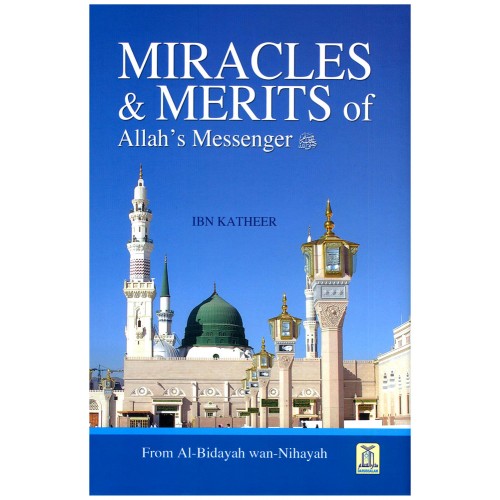
Miracles & Merits of Allah’s Messenger: from Al-Bidayah Wan-nihayah
Miracles & Merits of Allah’s Messenger By Ibn Katheer The book then discusses the blessed and beautiful characteristics and merits of the Prophet and then goes on to describe the miracles that he performed. Ibn Katheer than compares the miracles given to Prophet Muhammad with those that were given to the other Prophets; he then shows that Prophet Muhammad collectively received the same miracles that were granted to the other Prophets separately. AI-Bidayah wan Nihayah (The Beginning and The End), by the renowned scholar Abu Al-Fida ‘Imad ad-Deen Isma’eel bin ‘Umar ibn Katheer, is considered as one of the most authoritative sources on Islamic History.
Umar ibn Abdul-Azeez The Just Caliph (IIPH)
This book, written by Luqman Nagy, highlights the life and times of ‘Umar ibn ‘Abdul-‘Azeez, a truly exceptional Muslim ruler who, during his twenty-nine months in office, governed the Ummah totally in accordance with the Qur’an and the Sunnah. His sincere devotion to the religion of Islam enabled ‘Umar ibn ‘Abdul-‘Azeez to bring prosperity and contentment not only to the Ummah but to all those residing within the Umayyad state.


There are no reviews yet.