


| Weight | 0.26 kg |
|---|---|
| Product Type | Book |
| Author | |
| Publisher | Darussalam |
| ISBN | 9789960899923 |
Smaller Signs of the Day
RM19.00
Hurry up, Only 1 left.
Highlights:
somdn_product_page
Compare
The Day of Judgment in sure to come, but when it will be, it is a matter known only to Allah the Great.
But the Prophet Muhammad (S) has told us about some signs that indicate that the Day is coming nearer and nearer. Such signs are of three types: The first type of signs have already come to pass. The second type of signs are those that appear gradually with the passage of time. The third type is of the signs that appear just very near to the Day- these are called the Greater Signs of the Day. In this book we have dealt with the first two types of the signs that are known to be the Smaller Signs of the Day.
SKU: GB108
Category: General Islamic Books
Additional information
Reviews (0)
Be the first to review “Smaller Signs of the Day” Cancel reply
You must be logged in to post a review.
Related Products

Prophet Muhammad: A Blessing for Mankind
Highlights:
Prophet Muhammad (blessings and peace of Allah be upon him) and the lessons he taught us from the continued hardships he underwent in every stage of his life are a real blessing for humankind. Being an orphan child made him compassionate to widows and orphans as well as to the poor. His multiple marriages strengthened the ties of kinship amongst the different tribes, dissolving long-standing enmity. His message and prophethood were challenged by the polytheistic society in Makkah, forcing him and his few followers to emigrate to Madinah. Despite his illiteracy and the struggles he faced, he conveyed Allah’s Book, the Noble Qur’an, to all humanity, teaching them the values and principles that are presently adopted by billions of Muslims throughout the world. In the Qur’an, Allah, the Almighty addresses the Prophet (blessings and peace of Allah be upon him), saying: {We have sent you only as a mercy to the worlds.} (Qur’an 21: 107)
RM8.00 RM9.00


Hell-Fire Its Torments and Denizens
Highlights:
In all the divine revelations there is a constant warning that wrongdoers may end up in Hell-fire, though Allah’s kindness and mercy are extended to many people. Reading about the Hell-fire enables one to know it, fear it, and try utmost to keep oneself away from it through correct beliefs and good deeds. The more one knows about Hell-fire, the more he or she strives to be saved from its reach. Relying on statements from the Holy Qur’an and the Hadith, this book enables the reader to have a realistic picture of Hell-fire’s torments. It may be enough to know that it is a raging fire, but detailed knowledge of it, as displayed in this book, will strengthen a person’s belief and eventually, Allah willing, make him or her seek for and remain steadfast on the path to salvation. This is an indispensable book for believers and non-believers alike. Hell-fire: Its Torments and Denizens is an abridged, summarized version of Siddiq Hasan Khan’s book about the Hell-fire.
RM12.00

Philanthropy and Social Justice in Islam (P/B)
Highlights:
This book analyses the principles and practices of philanthropy and distributive justice in Islam. It argues, with analyses and examples, that the accomplishment of purposive philanthropy, as commanded by the fundamental tenets of Islam, through the professionalization and rationalization of zakat management, modernization of awaqaf, etc. has the potential of optimizing justice in Muslim societies. The work draws on the Quran, Hadithe, other authentic literature, and also on official documents and publications of management agencies dealing with philanthropy in different Muslim countries/societies. The analyses are documented enough to be used as a text for the study of philanthropy in Islam in tertiary institutions nonetheless are simple enough to draw general readership and to be used by non-profit and international organizations worldwide in order to order to understand the principles and issues of philanthropy and distributive justice in Muslim societies.
RM40.00


A Guide to Salah (Prayer) (P/B)
5 ★
5 ★
1 Rating
5 ★
1
4 ★
0
3 ★
0
2 ★
0
1 ★
0
Highlights:
This book is the result of direct research into the Sunnah of Prophet Muhammad saw and makes numerous references to the original sources. It contains all the essential details of salah without being too bulky or complicated, thus making it an ideal reference book either at home or while travelling.
A clear and concise explanation on how to pray. Also gives a detailed description of the preliminaries to salah, and different types of salah, with easy-to-follow illustrations.
RM16.00
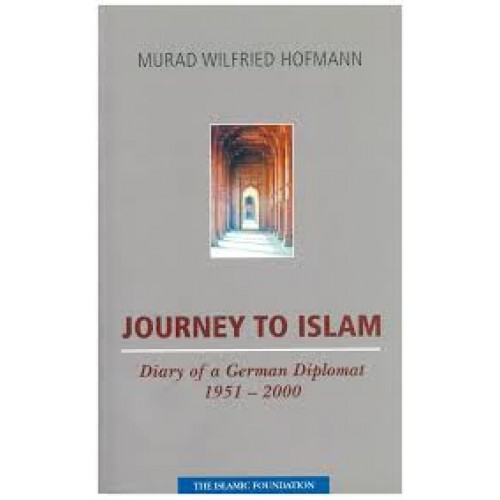
Journey to Islam: Diary of a German Diplomat 1951-2000 (The Islamic Foundation)
Highlights:
A lengthy process, rich in remarkable and thought-provoking events, including compelling encounters with Islamic philosophy, led the author to embrace Islam. His experiences since that time – such as his pilgrimages to Makkah – further deepened his understanding of, and identification with, this “fastest growing religion in Europe.” This “Diary” is, however, much more than a recorded soliloquy. It is a lively introduction to Islam as such – developed in the spiritual confrontation of a Muslim intellectual of European background with the ideology and value system of post-industrial western society.
RM25.00

Kindness to Parents
Highlights:
Kindness to Parents is a very enlightening booklet by Abdul Malik Al-Qasim. He has collected several stories and narrations that demonstrate the Birr (being dutiful) and kindness to our righteous Salaf towards their parents’ needs and necessities, in obedience to Allah’s worship in sincerity. He refers from the Noble Qur’an that a man is never allowed to say ‘Uff” (fie) if he smells a bad order coming from his parents or one of them.
The author has exposed shortcomings and errors of many among us who don not preserve the rights of their parents.
RM17.00


Provisions of the Afterlife Which Lie Within Prophetic Guidance (H/B – DKI
Highlights:
Written originally by Ibn Qayyim Al-Jauziyyah is one of the important resources of knowledge for those who seek to know the Seerah of their Prophet (P.B.U.H) as well as the Fiqh learned from it. This is a book that is unique in that it explains the Sunnah through the Seerah and the Seerah through the Sunnah. It is a profound classic work containing thousands of pages written by Imam ibn al-Qayyam while on the Hajj journey, Pilgrimage, from Damascus to Makkah. Despite its being written from memory, the several thousand incidents, Hadiths, Ayat (verses of the Quran), Fiqh benefits, as well as names of the companions associated with them, were remarkably close to the truth with marginal errors.
However, those who know the status, level of knowledge ad Ta’hqiq that Imam ibn al-Qayyim had will not be surprised to know this fact. Still, it is amazing how Ibn Al-Qayyim was able to write this vast volume while traveling to Hajj (Pilgrimage), especially since he was away from the resources of knowledge and was enduring the hardships of travel. It is a blessing from Allah (S.A.T) that it was possible for him to do so. Note: As with Many English Translations this work appears to be slightly abridged but it seems to cover most of the subjects Note : With the Lack of English works covering Hanbali Fiqh , This Books would be the nearest alternative. Although not a Specifically Fiqh Book, Ibn Qayyim’s views which are based on Hanbali Fiqh are quoted throughout.
RM130.00

Wholeness and Holiness in Education An Islamic Perspective (P/B)
Highlights:
It was initially an adaptation of Shah ‘Abdul Qadir Muhaddith Dehlawi’s translation and commentary known as Mudih al-Qur’an which according to many great ‘ulama’ is devinely inspired and accepted by all Muslims.
RM62.00

New Directions in Islamic Education : Pedagogy and Identity Formation (P/B)
Highlights:
New Directions in Islamic Education explores the relationship between pedagogy and the formation of religious identities within Islamic education settings that are based in minority and majority Muslim contexts. Based on empirical research, the book engages critically with the philosophical, theological and cultural dynamics that inform Muslim educational thought and practice. The book offers an integrated model of Islamic education that identifies the heart of the Islamic educational imagination as tarbiyah, a transformative process of becoming. Overall, this book seeks to ground the theory and practice of Islamic education within the experience of the educator and the learner, and it synthesises the spiritual foundations of Islam with the tradition of critical reflection within the classical Muslim educational heritage. This ground breaking and wide-ranging work should be of interest not only to Muslim educators and education specialists, but also to social scientists, theologians and policy makers.
RM120.00
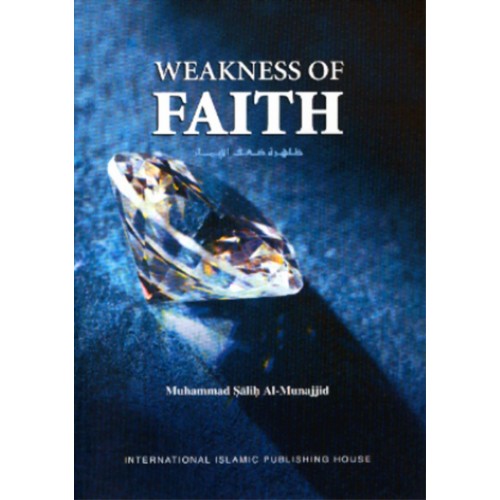

Weakness of Faith (IIPH)
5 ★
5 ★
1 Rating
5 ★
1
4 ★
0
3 ★
0
2 ★
0
1 ★
0
Highlights:
The phenomenon of weak faith has become very widespread among Muslims, and many people complain about the hardness of their hearts. So often we hear the words, “I feel hardness in my heart,” “I do not find any joy in worship,” “I feel that my faith has hit rock bottom,” “Reading Qur’aan does not move me,” “I fall into sin so easily.” The effects of this affliction can be seen in many people, and this problem is the cause of every disaster and adversity.
One of the most important principles which must be understood in order to treat the problem of weak faith is that faith increases and decreases, or waxes and wanes. This is one of the basic principles of the ‘aqeedah of Ahl al-Sunnah wa’l-Jamaa’ah, who say that faith is something to be spoken in words, to be believed in in the heart, and to be put into action. Faith increases with obedience and decreases with disobedience.
‘… that they may grow more in Faith along with their (present) Faith…’ [al-Fath 48:4]
‘… Which of you has had his faith increased by it? …'[al-Tawbah 9:124]. aari, Fath, 1/51).
RM13.00 – RM30.00Price range: RM13.00 through RM30.00
HardcoverPaperback
Clear


Ibn Taymeeyah’s Essay on the Jinn (P/B) ASN
Highlights:
Dr. Abu Ameenah Bilal Philips has rendered Ibn Taymiyah’s treatise, Eedaah-ud-Dalaalah fee ‘Umoom-ir-Risaalah, from volume 19 of Majmoo‘-ul-Fataawa into very readable English. This abridged and annotated translation is significant in that it is perhaps the first book available in English exclusively on the topic of spirit-possession and exorcism in Islam.
Ahmad ibn ‘Abdul-Haleem ibn Taymeeyah was bron in the town of Harran [near Edessa, in what was once Northern Iraq, but is now called Orfa and is a part of Turkey.], in the year 1263 CE. His father was a leading scholar of the Hanbalite school of Islamic law and so was his grandfather, who authored Muntaqaa al-Akhbaar, the text of ash-Shawkaanee’s Hadeeth classic Nayl al-Awtaar.
Ibn Taymeeyah mastered the various disciplines of Islamic study at an early age and read extensively the books of the various sects and religions in existence at that time. Much of his time and effort was spend defending the orthodox Islamic position against a tidal wave of deviation which had swept over the Muslim nation. Consequently, he faced many difficulties from both the prominent sectarian scholars of his time and from the authorities who supported them. His clashes with them led to his imprisonment on numerous occasions. Ibn Taymeeyah also fought, not only against internal enemies of Islaam, but also against its external enemies by both his Fatwaas (Islamic legal rulings) and his physical participation in battles. His ruling allowing the taking up arms against groups which recognized the Shahaadataan (declaration of faith) but refused to uphold some aspects of the fundamental principles of Islaam, greatly affected the resistance movement against the Tartars who had declared their acceptance of Islaam but did not rule according to divine law.
During these struggles he wrote countless books and treatises demonstrating his extensive reading and knowledge, not only of the positions of the early scholars, but also those of the legal and theological schools which had subsequently evolved. Ibn Taymeeyah also had a major effect on the open-minded schoars of his day, most of whom were from the Shaafi’ite school of law. Among the most famous of his students were IBN KATHEER, ADH-DHAHABEE and IBN AL-QAYYIM. The author died in 1328 while in prison in Damascus for his Fatwaa against undertaking journeys to visit the graves of saints [Ibn Taymeeyah’s ruling was based on the authentic statement reported by Abu Hurayrah wherein the Prophet Muhammad (sallallaahu alayhi wasallam) said, “Do not undertake a journey except to three masjids; this masjid of mine, Masjid al-Haraam (Makkah) and Masjid al-Aqsaa (Bayt al-Maqdis).” Collected by Al-Bukhaaree and Muslim]. His Fatwaa had been distorted by his enemies to say that he forbade visiting the Prophet Muhammad’s (sallallaahu alayhi wasallam) grave.
RM33.00
Recently Viewed


Smoking Intoxicants & Narcotics (P/B)
Highlights:
This book deals with the epidemic of smoking, which enslaves many of today’s Muslims, and which is aggravated by that most victims belittle its dangers and deny its prohibition.
This book includes a discussions of intoxicants, establishing the prohibition of various practices associated with them, as well as penalties (in both lives) for those who partake in them.
This book also includes a discussion of narcotics, with an overview of marijuana and qaat (or khat). Based on their established effects and harms, we conclude that narcotics are strongly prohibited, except in very limited medical settings.
This book, we hope, will provide many Muslims with guidance toward a healthier, cleaner and worthies Islamic personality. My Allah grant us guidance and facilitation.
RM28.00


(E-Book) Keys to a Successful Marital Life
Highlights:
What Allah the Most Exalted and the Most Mighty said concerning the meanings of love between spouses precedes what psychologists do say today. The psychologists emphasize the necessity of love in the human life and the need for every human being to love and feel the love of someone else. They assert that this human need is the foundation of rest of mind for an individual.
But how can one sustain affection throughout the years of marriage? What makes some people happy in their marriages while others fine marriage miserable? What is the real love that should prevail in every marital relationship? And what are the rights of the spouses on each other?
By Allah’s permission – this book provides comprehensive answers to these questions, compiled from a number of sources in order for us to quench the thirst of the thirsty about the issue.
RM26.00

RM21.00


Dutifulness To Parents
4 ★
4 ★
1 Rating
5 ★
0
4 ★
1
3 ★
0
2 ★
0
1 ★
0
Highlights:
After dutifulness to Allah, dutifulness to our parents comes next for Muslims, but what does our duty to our parents entail? In this little book, Nidhâm Sakkijha gives examples and evidence from the Qur’an and the Hadith of Allah’s Messenger (blessings and peace be upon him) to explain, point by point, what these duties are, and how the fulfillment of these duties may lead us to Paradise, while their neglect may mean that we end up in Hell. This concise and very useful volume has been translated into English by Iman Zakaria Abu Ghazi.
RM8.00 RM9.00

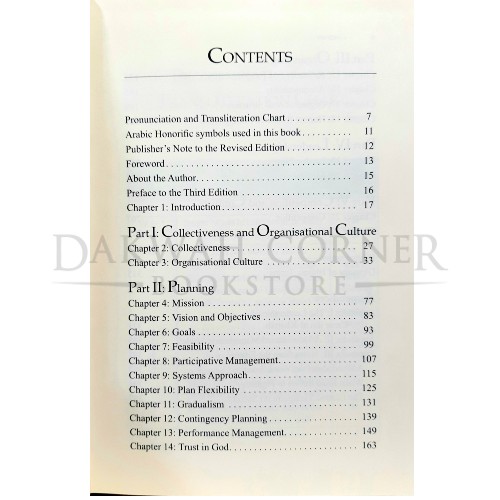
Islam and Management
Highlights:
In their pursuit for organizational improvement, modern managers have been searching for effective management theories and practices in both the East and the West. The interest of managers has expanded beyond contemporary management schools to include even ancient ones. Nevertheless, little attention is currently paid to the Islamic management approach, one that has far outperformed its contemporaries and left indelible marks on the minds of innumerable researchers, leaders, and managers that have followed. Islam and Management will shed light on the Islamic approach to management and delineate important lessons from the teachings of Islam and the experiences of Muslims. People who should read this book include all managers seeking to enhance the effectiveness of their organizations. This book is particularly important for Muslim managers who will find its approach to be coherent with their cultural values. Topics covered in this book include organizational culture, planning, organizing, leading, motivating, controlling, competition, conflict management, and human resource management. This book also includes a chapter on the enriching leadership of ‘Umar ibn al-Khattâb, the second caliph of Islam. The hardcover version of this book that we have for sale is the revised 3rd edition, published in 2011.a
RM90.00

Leadership: An Islamic Perspective
Highlights:
Beekun and Badawi, both professors of management and strategy, have written this primer on leadership integrating contemporary business techniques with traditional Islamic knowledge. The leadership paradigm is changing, and a leadership model based on ethical principles is finally emerging-a position that Islam has taken from the start. The synthesis of the authors results in a highly practical and inspiring manual for developing leadership skills.
RM80.00
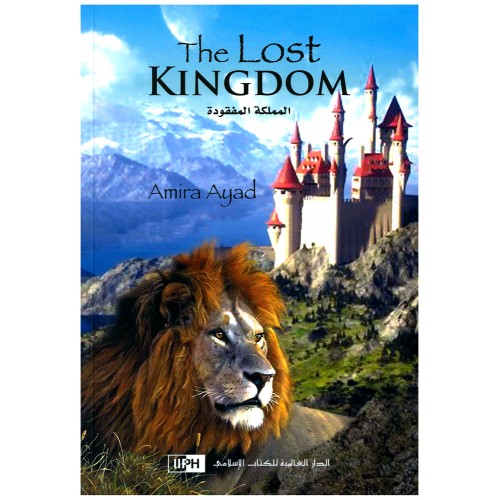
The Lost Kingdom (P/B)
Highlights:
The Lost Kingdom is the story of wild lions who long ago adopted a very different way of life – that of domestic cats. Many of them forgot their history and their great past, until one day… Meet Layth, an intelligent and courageous cub seeking truth and adventure. He and his friends decide to dig up the past and begin to question why their fellow lions behave the way they do. They begin to address the problems that have been buried deeply for too long. Soon, Layth and his friends have a mystery on their paws – will they be able to solve it before they are caught, or will they be stopped before they can even begin? Generating enthusiasm and providing food for thought for young minds, The Lost Kingdom is an interesting fable of adventure, courage, and chivalry in the face of severe hardships.
For ages 7-12
RM28.00
Smaller Signs of the Day
Highlights:
The Day of Judgment in sure to come, but when it will be, it is a matter known only to Allah the Great.
But the Prophet Muhammad (S) has told us about some signs that indicate that the Day is coming nearer and nearer. Such signs are of three types: The first type of signs have already come to pass. The second type of signs are those that appear gradually with the passage of time. The third type is of the signs that appear just very near to the Day- these are called the Greater Signs of the Day. In this book we have dealt with the first two types of the signs that are known to be the Smaller Signs of the Day.
RM19.00


Commentary on Kitab At-Tawheed – 2 Volumes (H/B)
Highlights:
The title of the Arabic explanation by the shaykh is Al Qawl Al Mufeed Alaa Kitaab at-Tawheed.
RM145.00
There are no reviews yet.