


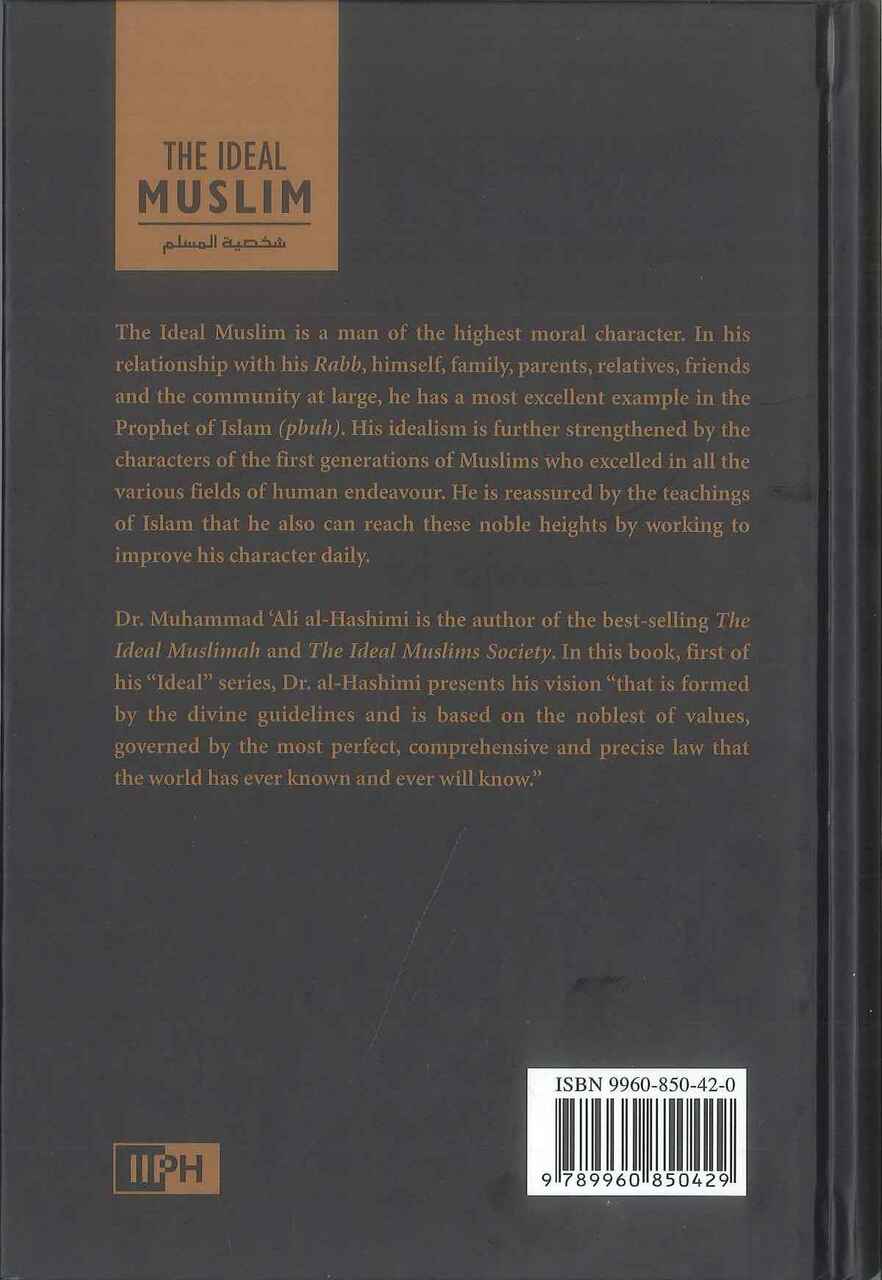



Who is the ideal Muslim Man? What Islamic traits does such a being possess? Is it even humanly possible to become an ideal Muslim today? In all areas of life, we can learn through the teachings of Prophet Muhammad (blessings and peace of Allah be upon him). There are many lessons to learn by his example. They lead us to believe that the good personality traits of a Muslim are ones that naturally propel us to be closer to Allah. In this book we examine proofs from the Qur’an and the Sunnah that give us an idea about those characteristics that will guide us in our hearts and actions to be better people in the eyes of our Creator. This extremely useful and bestselling book was translated into English by Nasiruddin al-Khattab. From the translator: The author gives a clear overview of the practical aspects of the Islamic lifestyle, as exemplified by the Prophet (blessings and peace of Allah be upon him) and his Companions. Moving from the innermost aspect of the individual’s spiritual life to his dealings with all those around him, one can see how the Muslim is expected to interact with all others in his life. This book is valuable for individual self-development, but will also serve as a rich source of material and ideas for study circles and discussion groups. The author supports each point with extensively evidential quotations from the Qur’an and Sunnah and gives us thereby an insight into the life of the first Muslim community in Madinah. At a time when alien influences are overwhelming Muslims throughout the world and the temptation to adopt un-Islamic ways is greater than ever, this book serves as a timely reminder to us to go back to our Islamic sources and to adhere to our distinct, divinely-ordained way of life. Dr. Muhammad Ali al-Hashimi is a well known writer in the Arab world. Born in Syria, he is the author of numerous works on Islamic and literary topics. This was the first of several of his books to be translated into English.
The Ideal Muslim
$17.05
Who is the ideal Muslim Man? What Islamic traits does such a being possess? Is it even humanly possible to become an ideal Muslim today? In this authentic Islamic book, Dr. Muhammad Ali al-Hashimi guides the readers to practically adopt an Islamic personality and lifestyle, and interact accordingly with others in the society. This Islamic self-help book is a must-read for self-development and self-improvement. It is also a rich source of material and ideas for study circles and discussion groups.
| Weight | 0.55 kg |
|---|---|
| Dimensions | 21 × 16 cm |
| Product Type | Book |
| Author | |
| Publisher | IIPH |
| Pages | 386 |
| ISBN | 9789960856429 |
| Binding | Hardbound |
Be the first to review “The Ideal Muslim” Cancel reply
You must be logged in to post a review.
Related Products


Enjoy Your Life (Full Color) – Darussalam
This is an exquisite collection of incidents from the life of the Prophet (S), stories from our Islamic Heritage, and thought-provoking anecdotes from the life of the author. The aim of the book is to train the reader to enjoy living his life by practicing various self-development and inter-personal skills. What is so compelling and inspiring about this book is that, in order to highlight the benefit of using social skills, the author draws from the lives of the Prophet (S) and his Companions. This book is both a practical systematic guide to self-improvement and a treasure trove of historical incidents. It increases self-awareness, whilst nurturing the soul and strengthening the spirit. The books author is a prominent figure in the field of Islamic Dawah and has authored more than twenty published works.
Excellence of Patience & Gratefulness
This book is written to highlight the necessity and the pressing need to pursue these two qualities and to illustrate that happiness in this world and the Hereafter is dependent on them. It is intended to be a comprehensive, extensive and useful book.


A Muslim Boy’s Guide to Life’s Big Changes (Ta-Ha)
Motivational & Manners


Festivals & Celebrations In Islam
Festivals and celebrations are occasions of joy and happiness. They have their distinctive spirit in all societies and cultures, and are eagerly awaited and heartily welcomed by everyone.
The feeling of excitement associated with these occasions, however, causes people to introduce uncommon, strange or even bizarre practices during them.
Islam regulates the occasions to be celebrated and the methods of celebrating them. It maintains their atmosphere of happiness, while redirecting
This book discusses the two annual Islaamic festivals: Eid ul-Fitr and Eid ul-Adhaa as well as the weekly Jumu’ah. It presents the Islaamic guidelines for celebration according to the Quraan and Sunnah, and warns against innovated occasions and un-Islaamic festivals.
In addition to topics that are standard to ‘Id celebration, such as the ‘Id prayer and khutbah, and ‘Id pastimes, this book discusses zakat-ul-fitr, the sacrifice, the blessed days of the month of Thul-Hijjah, and numerous other ‘Id-related issues.
The broad and thorough discussions in this book make it an important manual and complete reference on festivals and celebrations in Islam. Indeed, from Allah (swt) we seek help and acceptance.


50 Candles To Light Your Path (P/B)
One goal brings them together : how to improve the well-being of our sons and daughters, how to aid them towards threading the path of guidance to engender their excelling in their academic, work and other facets of life.


Dutifulness To Parents
After dutifulness to Allah, dutifulness to our parents comes next for Muslims, but what does our duty to our parents entail? In this little book, Nidhâm Sakkijha gives examples and evidence from the Qur’an and the Hadith of Allah’s Messenger (blessings and peace be upon him) to explain, point by point, what these duties are, and how the fulfillment of these duties may lead us to Paradise, while their neglect may mean that we end up in Hell. This concise and very useful volume has been translated into English by Iman Zakaria Abu Ghazi.


One Hundred Pieces of Advice
One hundred treasured advices extracted from the writings of the illustrious scholar, Imām Ibn al-Qayyim (may Allāh have mercy upon him): Ten ways to acquire Allāh’s love Ten ways to be patient and avoid sins Ten ways to be patient during a calamity Ten benefits to lowering your gaze Ten ways sins are expiated Ten barriers between the slave and his Lord Ten reasons knowledge is not put into action Ten ways to open your heart Ten ways to protect against envy Ten ways to protect against the plots of the Shayṭān


Diseases Of The Hearts & Their Cures (Dar as Sunnah)
Translated by Abu Rumaysah “Know O beloved reader that it is most important to spend one’s time and energy in treating the heart, and hastening to correct and purify it from sickness and all sins. This is due to the heart occupying a great and lofty position in Islaam, for it is the place to which the Lord looks and the storehouse for tawheed, faith, and sincerity. Actions are distinguished, one from the other, with respect to their excellence in the Sight of Allah in accordance with the condition of the heart, not by their number or form, but rather due to the strength of the caller, his or her truthfulness, his or her sincerity and the extent to which he or she prefers Allah over himself or herself … Al-Haafidh ibn Hajr al-Asqalaanee, may Allah have mercy upon him and provide us with his knowledge, said: “The heart has been singled out for this because it is the leader of the body, and through the purification of the leader the subjects become purified, and with his corruption they become corrupted. So if you, O servant of Allah, with to cure your heart then it is upon you to be truthful with regards to seeking refuge with Allah and putting your trust in Him, to pray a great deal of superogatory prayers, to perform the actions of obedience to Allah frequently, to pray the night prayer while the people are sleeping, and to treat your heart by making it continuously stick to the remembrances and by befriending only the righteous … and to frequently recite the Qur’an. And Allah will indeed allow all of this to be preserved by him.”

Family Leadership – Qawamah
This book discusses in details family leadership (Qawamah) in Islam and the many misconceptions that arise around this concept. It provides a detailed analysis on the subject from a variety of available literature and emphasizes that it is primarily an obligation to be fulfilled on part of the husband toward his family. It also provides many practical examples on the appropriate use of Qawamah as well as its inappropriate use.
“….an extremely valuable springboard for further discussion and consideration of a most timely topic that affects every Muslim family in North America. As a Muslim with a doctorate in clinical psychology, it is my professional recommendation that every mosque and Islamic center in North America should use Dr. Beshir’s new book to lead in-depth study and discussion sessions about the role of family leadership within Islam.” – Jerald F. Dirks, M.Div., Psy.D.


Don’t Be Sad By Dr. A’id al-Qarni
At a time in which the Muslims are beset with trials from every periphery and within, comes this heartening book rooted in the commandments of Allah (swt), the Sunnah and the excellent guidance and examples of the Muslims that have come before us. Don’t Be Sad is an absolute must-read for all people. It is full of practical advice on how to replace sadness with a pragmatic and ultimately satisfying Islamic outlook on life. It exposes to the modern reader how Islam teaches us to deal with the tests and tribulations of this world. So, take heart and hold firmly onto the rope of Allah (swt)

From my sisters’ lips
Covered from head to toe with only her eyes visible, the sight of a Muslim woman on a western city street rarely fails to provoke a strong reaction. Feelings of shock, horror, repulsion, pity or even fear are not uncommon. But have you ever wondered who it is behind the veil and what makes her tick? Ever wondered what her life is really like and whether her dreams, hopes and aspirations differ from yours? From My Sisters’ Lips offers a rare glimpse into the lives of a community of women, most of whom are converts to Islam, and invites you to share their joys, sorrows, convictions and faith.
When Na’ima B Robert abandoned her western lifestyle and embraced Islam six years ago, it was not a decision taken lightly. Yet soon after she took her first tentative steps towards covering, she felt empowered; no longer judged on physical appearances alone, no longer seeking the approval to feel beautiful – or using her looks to wield power over men – the experience effected her greatly. Before long she grew in confidence and courage. As she says, ‘Something just clicked. I thought, “Good, don’t look; don’t compare me with your latest squeeze, don’t try and guess my measurements – my body is my own business!”‘
From My Sisters’ Lips offers a glimpse into the lives of just some of the extraordinary women who, like herself, have chosen to live behind the veil. What emerges is a vivid and intimate portrait of a sisterhood; as they speak candidly and with conviction on a diverse range of subjects ranging from marriage to motherhood, stereotypes, submission and self-image, we hear the strong, proud voices of those who are seldom heard.

Golden Words (H/B)
Islam has declared this world and life as a test case for human beings. To live a successful life, Allah SWT has sent His Divine Teachings to help humans understand what to do and what not. This book “Golden Words (Golden Stories) consists of short stories and incidents that occurred during the life time of Prophet (Peace be upon him), Rightly Guided Caliphs, Salf-us-Saleheen, renowned kings/ rulers and other shining stars of the Islamic history. The purpose of these short stories is simple; providing real-life lessons to the readers.
The book provides a clear understanding of our ancestors, their thorough and firm knowledge, their intelligence, proper comprehension, modesty, sacrifices and their endeavors to elevate the truth. This is particularly rewarding book for youngsters that will find it a helping hand in living as per Islamic principles.
Recently Viewed


Dunia Jin Dan Setan – Serial Aqidah Islam – 3


Treasure From the Treasures of Paradise (P/B)
Allah, The Most High, Said, “The men who remember Allah often and the women who do so – for them Allah has prepared forgiveness and a great reward.” [Al-Ahzab, 35]. He also Said, “O you who have believed, remember Allah with much remembrance, And exalt Him morning and afternoon…” [Al-Ahzab, 41] Al-Bukhari recorded a report from AbuMusa al-Ash’ari (may Allah be pleased with him) who narrated that the Messenger of Allah said, “The example of a person who makes dhikr of his Lord and a person who does not, is like that of a living and a dead person.”
Making dhikr (remembrance of Allah) has a lofty place in the Din of Islam and is inherently inscribed in the souls of the believers; for it is from the greatest acts of worship and provides enumerable fruits and benefits in this life and the next.
Dhikr is distinguished with many virtues through its perfect meanings, beautiful phrasings and comprehensiveness that contains depth of meaning and incorporating all types of goodness. Its wordings are concise while reflecting great reward, is easy to remember and pronounce possessing tangible effects on the body and soul.
From such great adhkar the Prophet used to consistently make and encourage others regarding it, is the Hawqala, or the saying of ‘La Hawla wa la Quwwata illa Billah’. This remembrance has merits and virtues none but Allah fully encompasses – the meanings and implications of which, lead to certainty and solace through strengthening ones’ faith and connection with Allah. This special dhikr is of such importance that the author (may Allah preserve him) saw the need to single it out in this short treatise, entitling it, “The Hawqala: Its meanings, virtues, and creedal implications”. It is hoped Muslims will focus their efforts in meaningfully utilising this phrase and making it a regular feature of their every day lives, along with other types of remembrances of Allah.

In Pursuit of Allah’s Pleasure
In this book the authors outlined a complete methodology for Islamic work today. From `Aqeedah to Da’wah, Jihad to Khilafah and Taqwa to Sabr (patience), they explained how all of these parts of Islam come together for the sole objective of each and every Muslim: to seek the Pleasure of Allah ( SWT ), the Irresistible. It was written in a manner portraying the true situation of the Muslims today and, coming from imprisoned scholars: a realistic portrayal.
This book is an excellent read by itself and an even better guide if used as a syllabus in learning Islam in an organised, collective manner. It is ideal as a basis for study circles and acts as a comprehensive manual. Coupled with the supplementary reading of some other books in the English language and memorisation of the Holy Quran, it can consolidate the knowledge of anyone seeking to work for Islam in this day and age.
Contents
Preface
Introduction
Part One: Our Ultimate Goal
Part Two: Our `Aqeedah
Part Three: Our Understanding
Part Four: Our Aim
Part Five: Our Path
Part Six: Our Provisions
Part Seven: Our Walaa’ (Loyalty)
Part Eight: Our ‘Adaa’ (Animosity)
Part Nine: Our Gathering
Glossary of Arabic Trems
The Twentieth Century has witnessed one of the fiercest blows inflicted upon our Ummah by our enemy: the collapse of the Khilafah. If only their conspiracy had stopped at the demise of Khilafah. But they went on to indoctrinate Muslims with strange, foreign ideas and concepts, in order to confuse our understanding of our Deen. Once we wake up and try to return to our original Deen, we will be confronted with an intellectual perplexity, in which evil and good is mixed. Hence, the truth will be ambiguous and we will go astray, and lose the true understanding of Islam.
And hold fast, all of you together, to the Rope of Allah (this Qur’an) and be not divided among yourselves.” [Surah Ale-Imran (3), Ayah 103.]
by Dr. Naahah Ibrahim, Asim Abdul Maajid and Esaam-ud-Deen Darbaalah


Trials and Tribulations
These two treatises deal with the issue of trials and tribulation, extremely essential for every Muslim especially in the times that we are living in today. People often see, and hear of, the believers being afflicted with adversity and tribulation, and conversely they often see, and hear of the disbelievers attaining leadership and wealth in this world. This leads them to mistakenly believe that well-being in this world is only reserved for the disbelievers. A believer may face many trials and tribulations that test his faith, patience and endurance. In a world full of conflict and war, with many also suffering from personal and family problems, shaytan causes a person to question many things. If a Muslim is tried with a difficulty, then the reasons for this are many – including one’s own sin, which arise from leaving something obligated in Islam or comitting an act that is prohibited. Trials are also a means of Allaah purifying and aiding His servants, ennobling them and granting well-being through His Wisdom. The most severely of those who were tried were the Prophets and then those closest to them in following their guidance.
There are no reviews yet.