



| Weight | 0.22 kg |
|---|---|
| Dimensions | 17 × 24 cm |
| Product Type | Book |
| Author | |
| Publisher | A.S Noordeen |
| Pages | 166 |
| ISBN | 9789830652627 |
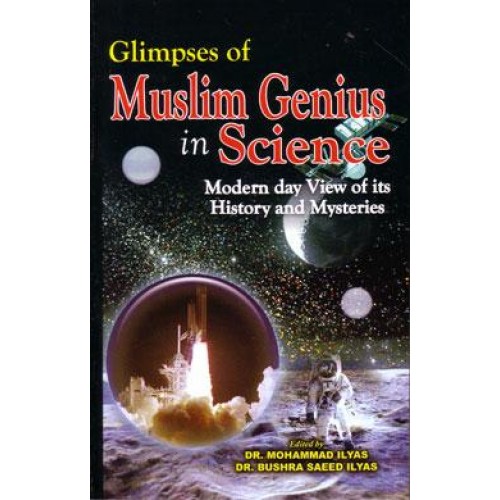
Glimpses of Muslim Genius in Science (P/B)
RM22.00
Hurry up, Only 1 left.
Highlights:
somdn_product_page
Compare
This should be educational for Muslims & non-Muslims & create a better East-West appreciation for mutual role. This book will enforce the fact that the civilization which produced this phenomenal output also has potential in the future.Dr. Mohammad Ilyas & Dr. Bushra Saeed Ilyas
SKU: HS47-1.
Category: Histories and Stories
Additional information
Reviews (0)
Be the first to review “Glimpses of Muslim Genius in Science (P/B)” Cancel reply
You must be logged in to post a review.
Related Products

The Travels of Ibn Battuta (P/B)
Highlights:
Of the multitude of histories and and biographies of Medieval Islam there is no book more instinct with life than that of Ibn Battuta. This book provides a descriptive account of Muslim society in the second quarter of the 14th century.
RM26.00


Stories of the Prophets-Darussalam (H/B)
Highlights:
In this book, the stories of the prophets have been compiled from ‘Al-Bidayah wan-Nihayah’ (The Beginning and the End) which is a great work of the famous Muslim exegete and historian Ibn Kathir and has a prominent place in the Islamic literature. The stories of the prophets and all the events in their lives have been supported by the Qur’anic Verses and the Sunnah (traditions) of the Prophet (S). Wherever it was necessary, other sources have also been reported for the sake of historical accounts, but on such places a comparative study has been made to prove the authenticity of the sources. Ibn Kathir has reproduced the views and interpretations of all the great exegetes of the Qur’an of his time. The systemic narratives of the Stories of the Prophets have been written in chronological order which renders a historical style to the book.
Allah the Most Exalted says in the Qur’an:
- “We are relating unto you the most beautiful of stories in that what We have revealed to you from the Qur’an, though before it you were from among those who were not aware of them.” (12:3)
- “We have indeed sent aforetime Messengers before you, of them there are some whose stories We have related to you, and whose stories We have not related to you…” (40:78)
- “We relate to you the important news of their story in truth…” (18:13)
- “And all that We relate to you of these stories of the Messengers, We strengthen with them your heart. Through them there come to you the truth as well as admonition and reminder to all those who believe.” (11:120)
- “There is, indeed, in their stories lessons for people endowed with understanding. It is not any invented tale, but a confirmation of what went before it, and a detailed exposition of all things, and a guide and a mercy to the people who believe.” (12:111)
- “…so relate the stories, perhaps they may reflect.” (7:176
RM85.00


Life and the Times of the Messengers (H/B)
Highlights:
The exact number of prophets and messengers sent by Allah is not known, but the Qur’an makes clear that all of the prophets were sent to various nations to preach Islamic monotheism. Muslims believe that all the Divine Messengers ? including those in common with Judaism and Christianity ? conveyed the same message of true monotheism and submission to the one God, Allah. Belief in these prophets and messengers is an essential part of the Islamic faith and Muslims do not differentiate between them, according them all the same respect and reverence.
RM85.00


Atlas of the prophets & Messengers (H/B)
5 ★
5 ★
1 Rating
5 ★
1
4 ★
0
3 ★
0
2 ★
0
1 ★
0
Highlights:
Historical atlas of the Prophets & Messengers
RM165.00


Islamic Dynasties A Celebration of Islamic History and Culture
Highlights:
The Book of Islamic Dynasties presents in one concise volume an introduction to the many great Islamic dynasties that have arisen, shone and faded – like stars in the firmament – but have left the Muslim world all the richer. The subtitle, A Celebration of Islamic History and Culture, reflects the importance of the inspiring cultural legacies bequeathed to us by our Muslim ancestors and the enormous contributions made by Muslims to world civilization.
Filled with beautiful hand painted illustrations to bring the text to life. This book will be a pleasure to read for both adolescents and adults and will insha’Allah enable the reader to better comprehend the complexities of life in today’s Dar al-Islam.
Luqman Nagy was born and raised in Vancouver, Canada. He graduated from the University of British Columbia with graduate degrees in Library Science and Education and subsequently pursued Middle Eastern language studies at Ankara University (Turkish), Pahlavi [Shiraz] University (Persian), and Umm al-Qur’a University, Makkah (Arabic). Since 1970, he has traveled the length and breadth of Dar al-Islam several times always in search of traditional Islamic societies. He currently resides with his family in Dhahran, Saudi Arabia where he teaches at King Fahd University.
RM85.00


The Middle East: a Brief History of the Last 2,000 Years
Highlights:
In a sweeping and vivid survey, renowned historian Bernard Lewis charts the history of the Middle East over the last 2,000 years, from the birth of Christianity through the modern era, focusing on the successive transformations that have shaped it.
RM98.00

Development of Science & Technology In Islamic History (P/B)
Highlights:
The objectives of this book are:
1- To examine the argument that there is a contradiction between science and Islam.
2- To highlight some of the great contributionsmade by Muslims to science and technology over a period of 1000 years.
Science has never been separate from Islam. Objective study of this subject will reveal that Islamic texts – Qur’an and the Sunnah, provided a tremendous boost for study of the physical world and the laws that govern it. As a result, discoveries and inventions became the hallmarks of the Islamic civilization. Recently there has been a surge in the number of publications dealing with science and its relationship with Islam.
These books have focused on the various verses on the Qur’an that point to the physical world to prove that science is compatible with Islam. However, areas that are not covered enough for the English reader are the historical development of science and technology in the Muslim world, and the factors that led to its rise and decline. The decline has been so severe, that today’s Muslims are not even aware that their ancestors were the founding fathers of modern sciences. Just consider the common Arabic words used in the English language today like cotton, algebra, aorta, alcohol, chemistry, earth and alkaline. They are a living testimony to the pioneering work of the Muslims.
I am proud to introduce this inspiring book to our readers. It focuses on the strides made by the Muslims in various disciplines of science and technology from the early period of the Islamic State to its last days in the 20t’ century CE. The unique aspect of this book is that it sheds light on the key factors that led to the rapid advances in science and technology. Furthermore, it also analyses the reasons why Muslim World declined in this field, and last but not least, how the Muslim World can achieve the same kind of success as we already have in the past. Abdul Malik Mujahid About the Author Shabeer Ahmad, born in 1966, is a respected technologist by profession. He studied Avionics Engineering at University of London and he is currently an IT Consultant, having worked in Asia, Europe, Middle East and North America. The author has written widely on various subjects in Islam, including science, economics, politics and history.
The author is also a well respected speaker. The current book started as a lecture for a radio station in London. Given the massive interest it generated, and the little information available, the author began to research more into historical developments of science in the Muslim world. The author felt that the contributions of Muslims in this area have not been widely acknowledged, and that there is a need to counter the view that Islam is incompatible with science. The current book is a culmination of his research over the years.
RM26.00


The Introduction of Ibn Khaldoun
Highlights:
This introduction was considered as a separate book, taking a form of an encyclopedia, talking about a field of knowledge of legalization, history, geography, economy, social, politic and medicine.
RM160.00


Pioneers of Islamic Scholarship
Highlights:
Over the fourteen centuries of its existence, Islamic scholarship has produced numerous individuals who have distinguished themselves by acquiring broad knowledge and deep insight.
- However, true distinction is only achieved through a lasting influence, particularly when the area of scholarship is a religion that presents itself as being suited to all communities at all times.
- The selection has to start with the founders of the eight schools of jurisprudence who have had a continuous following over the centuries up to the present day.
- This book introduces nine scholars from these schools and adds two more from a much later era whose influence extended far beyond the area of pure scholarship.
- In simple language, this book gives a clear picture of how the Islamic schools of jurisprudence differ in their methodologies, showing at the same time how much interaction they project.
- It serves as a primary source for those who wish to follow a course in Islamic studies, this book is indispensable for others who wish to have a fair but concise idea about the most important personalities who have shaped Islamic scholarship for centuries.
RM62.00
Recently Viewed
Ghibah (Backbiting) : The Root Cause of All Evil : The Commands and Prohibitions of the Shariah
Highlights:
Islam is a religion of peace, love, and compassion. Lies, suspicion, backbiting, slander, vain talk — all these are anathema to Islam. Indeed, such negative activity sows the seeds of enmity among the people and ultimately brings about the downfall of society. Backbiting (ghibah) in particular, according to the Qur’an, is not just a common social evil, but rather an abhorrent act, a major sin — the equivalent of eating one’s brother’s flesh.
Numerous ahadith of the Prophet Muhammed (pbuh) also underscore the complete futility, extreme loathsomeness and grave consequences of the deliberate misrepresentation of others. Backbiting, by the unanimous rulings of religious scholars (ijma) is forbidden, so that anyone who indulges in it is guilty of serious wrongdoing. Yet people have no qualms about engaging in this practice, flouting all prohibitions and strict commands.
Drawing upon important source material on the subjects of backbiting, false accusation (bhutan), and related issues, this book highlights the need to keep our society free of his ignoble malaise. To this end, it elucidates the relevant commands and prohibitions of the Shari’ah, so as to create in the minds of its readers a deep awareness of the sinfulness and ill effects of calumny.
By Shakil Ahmad Khan and Wasim Ahmad
RM16.00

Manufacturing of Halal Pharmaceuticals (P/B)
Highlights:
This book aims to cover the fundamental aspects of pharmaceutical manufacturing from the Islamic worldview to inspire students that whatever they do including very mundane routine work such as checking pH can be an ‘ibādah – if they work within the sphere of Islamic teachings and in shā’ Allah all the time and effort will be rewarded by Allah SWT. The first chapter describes the Islamic perspectives towards the safeguarding of life vis-à-vis the use of medicines or pharmaceuticals and can be considered as an overview for the Islamic manufacturing practices. Although this book is about the manufacturing of pharmaceuticals, other industries may benefit from the discourse and examples given. As much as possible, processes and regulations are described in the book so that it covers the syllabus of industrial pharmacy for undergraduate use and still can be referred for postgraduate studies.
RM70.00


114 Tips to Help You Finally Memorize The Qur’an (P/B)
5 ★
5 ★
1 Rating
5 ★
1
4 ★
0
3 ★
0
2 ★
0
1 ★
0
Highlights:
“114 Tips to Help You Finally Memorize the Qur’an is a concise book that aims to equip readers of all backgrounds with the information and techniques necessary in order to begin, continue with, and complete the memorization of the Qur’an, eliminating thereby the common excuse and reasons for not memorizing.”
RM80.00


Treasure From the Treasures of Paradise (P/B)
Highlights:
Allah, The Most High, Said, “The men who remember Allah often and the women who do so – for them Allah has prepared forgiveness and a great reward.” [Al-Ahzab, 35]. He also Said, “O you who have believed, remember Allah with much remembrance, And exalt Him morning and afternoon…” [Al-Ahzab, 41] Al-Bukhari recorded a report from AbuMusa al-Ash’ari (may Allah be pleased with him) who narrated that the Messenger of Allah said, “The example of a person who makes dhikr of his Lord and a person who does not, is like that of a living and a dead person.”
Making dhikr (remembrance of Allah) has a lofty place in the Din of Islam and is inherently inscribed in the souls of the believers; for it is from the greatest acts of worship and provides enumerable fruits and benefits in this life and the next.
Dhikr is distinguished with many virtues through its perfect meanings, beautiful phrasings and comprehensiveness that contains depth of meaning and incorporating all types of goodness. Its wordings are concise while reflecting great reward, is easy to remember and pronounce possessing tangible effects on the body and soul.
From such great adhkar the Prophet used to consistently make and encourage others regarding it, is the Hawqala, or the saying of ‘La Hawla wa la Quwwata illa Billah’. This remembrance has merits and virtues none but Allah fully encompasses – the meanings and implications of which, lead to certainty and solace through strengthening ones’ faith and connection with Allah. This special dhikr is of such importance that the author (may Allah preserve him) saw the need to single it out in this short treatise, entitling it, “The Hawqala: Its meanings, virtues, and creedal implications”. It is hoped Muslims will focus their efforts in meaningfully utilising this phrase and making it a regular feature of their every day lives, along with other types of remembrances of Allah.
RM39.00
There are no reviews yet.