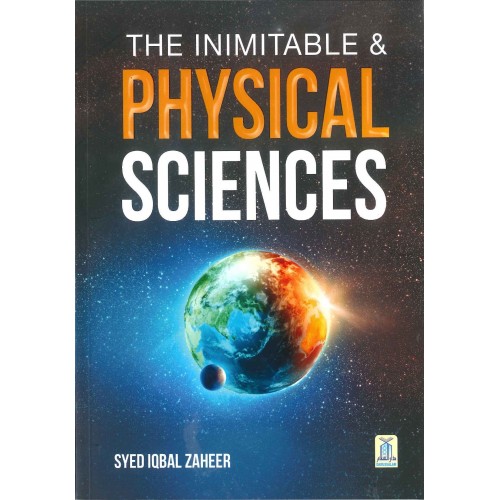
For the first time, Muslims are faced with a worldwide positivism which is working to use knowledge, the sciences and their discoveries and achievements in a manner which severs the relationship between the Creator, the created universe and man, thereby disregarding the world of the unseen and driving a wedge between science and values. Lacking even the most modest store of vital Islamic doctrine on the intellectual level, university students and researchers in the Islamic world are confronted with doctrines and philosophies which are presented to them together with a flimsy, miserable defense of Islam. There is not a single academic institution in the Islamic world in which Islamic thought is taught and in which the Islamic vision is given a deep-rooted foundation with the same force and persuasiveness with which Western ideas and the Western vision are taught to students in the West, in a coherent, comprehensive manner accompanied by seriousness and commitment on the part of all.The books argues that this approach is diametrically opposed to the Islamic perspective and that we must disengage human scientific achievement from positivistic philosophical premises and reemploy these sciences within a systematic epistemological framework based on divine revelation, conferring honor upon all forms of knowledge, as having been bestowed upon man by their Creator.
Islamic Thought: An Approach to Reform
RM47.00
| Weight | .300 kg |
|---|---|
| Author | |
| Binding | Paperbound |
| ISBN | 9781565644267 |
Be the first to review “Islamic Thought: An Approach to Reform” Cancel reply
You must be logged in to post a review.
Related Products
The Modernist Menace To Islam
The Dilemma of Muslim Psychologists (P/B) (IBT)
Psychology, with all its by-products and off shoots, has assumed in the West the status of religion, and for many people has replaced it. As in other areas of social sciences, some Muslim thinkers and scholars have developed an amazing skill for the unthinking repetition and blind copying of Western, non-Islamic ideas and practices. “In the Lizard’s Hole” is a Prophetic epitaph that describes this activity very well. Some Muslim psychologists insist dogmatically on prying even into lizard’s holes that have been partly or totally abandoned by their Western counterparts. But do Muslims really need modern psychology at all? Is modern psychology wholly Western? Is there a way in which it could be reconciled with Islam? These burning questions lie lurking behind the dilemma of Muslim psychologists.
Medicine And Pharmacy In The The Prophetic Traditions (H/B)
Medicine and Pharmacy in the Qur’an and Prophetic Traditions aims to integrate the science of healing into the religion of Islam. It provides advice and guidance on maintaining sound health and preventing diseases and ailments in compliance with the Qur’an and the Sunnah of Prophet Muhammad (blessings and peace be upon him). It also discusses the Qur’anic verses related to health, sickness, and cure, as well as the spiritual and physical remedies recommended by the Prophet (blessings and peace be upon him) in light of modern knowledge.
Contemplation: An Islamic Psychospiritual Study (IIIT) (Book in Brief Series)
IIIT Books-In-Brief Series is a valuable collection of the Institute’s key
publications written in condensed form to give readers a core under-standing of the main contents of the original.
Scientific Facts Revealed In The Glorious Quran
Scientific Facts Revealed in the Glorious Qur’an : Selected examples from the area of Earth Sciences, by geologist Prof. Dr. Z. R. El-Naggar. This small book includes has 16 pages with color illustrations to help the reader visualize what the author explains. He discusses verses in the Qur’an with the supporting scientific facts.
Islamic Civilisation and The Modern World (P/B)
This book presents a thematic treatment of Islamic civilisation. Each of the fourteen chapters comprising this book treats at least one of the major themes that are characteristic of this youngest religiously-based civilisation of the world.
Are We Muslims (Al-Firdous LTD)
An important work by Sheikh Muhammad Qutb about the true meaning of being a Muslim, questioning whether the life we are living today as a nation of Muslims is truly the Islamic life taught by the Qur’an and Sunnah.
The Problem Of Corruption (P/B) (IBT)
“Corruption is a disease that can sweep through society like a tidal wave, leaving in its wake a trail of negligence, lethargy, inefficiency and callous disregard of man’s inhumanity to man. What is it like to live inside such a society? Why has it taken such strong root in so many countries? Is there no sense of outrage and shame against such a phenomenon among our elite? What can be done to stem the tide? Is it corruption as it is known in the West? These disturbing questions and more are answered in this book. Corruption in all its forms, bribery nepotism, and extortion, is shown for what it is – a major cause of the dehumanization and victimization of innocent people. The corrupt have no aspirations for the betterment of their societies. For this reason, all decent people must be gravely concerned with the problem and nurture the next generation to confront the corrupt and disrupt their way of life.”
Recently Viewed
The Sources of the Qur’an
“Who is the author of the Qur’an?” On this subject scholars have flagrantly contradicted each other. This work attempts to make a critical review of the major ‘authorship’ theories by pressing into service logical arguments, historical evidence, textual analysis and scientific data. Probably, the only point of agreement about the Qur’an is that it was uttered for the first time by a man who was born in Makkah (Mecca), a city of Arabia, in the sixth century—a man by the name of Muhammad (blessings and peace be upon him). As to the source of the Qur’an, scholars are divided into three main groups: those who believe that Muhammad (blessings and peace be upon him) himself was the author; those who believe that he was not the author himself but learned it from another human author or authors; and those who believe that the Qur’an has no human author but is rather a word-for-word revelation from God. Hamza Njozi examines the three theories and comes to a firm and logical conclusion.
Arabic Picture Dictionary for Kids (P/B)
Goodword Arabic Picture Dictionary for Kids, is the perfect first reference book created to help your child learn Arabic in an easy and fun-filled way. This book includes over 500 commonly used words and their helpful definitions of them in English and Arabic. These are accompanied by colourful and amusing illustrations of familiar subjects to better understanding. Goodword Arabic Picture Dictionary of Kids, is a must-have vocabulary building and Arabic learning resource book for your child.


There are no reviews yet.