| Weight | 0.17 kg |
|---|---|
| Product Type | Book |
| Author | |
| Publisher | Goodword |
| Pages | 32 |
| ISBN | 9789351790129 |
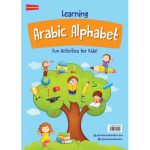
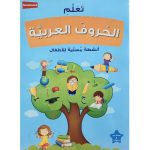
Learning Arabic Alphabet
RM13.00
Fun activities for kids to learn the Arabic alphabet!
Be the first to review “Learning Arabic Alphabet” Cancel reply
You must be logged in to post a review.
Related Products
Arabic Alphabet Flash Cards (28 Colourful Cards)
Children have a tremendous capacity for expanding their knowledge, especially during their first six years. That’s when they are most eager to learn new things, and learning and playing with flash cards is an excellent way to satisfy their natural curiosity. Arabic Alphabet Flash Cards have many special features that improve on the traditional flash card, so you can take full advantage of your child’s instinctive leaning abilities.
Arabic Writing Book 1
This series is perfect for your children to practice their Arabic writing skills. These books will bring out the latent calligraphers in them.
Ali Ibn Abi Talib: The Fourth Caliph of Islam
This book is about the life and teachings of Ali Ibn Abi Talib (may Allah be pleased with Him), The Fourth Caliph of Islam.
Fun with Arabic Alphabet
Fun ways to learn the Arabic alphabet!
Eid and Ramadan Songs
Eid-ul-Fitr is always an occasion for great fun and celebration. After a month-long Ramadan, everybody looks forward to a great Eid. Eid-ul-Fitr also calls for thanking Allah for His blessings, helping the poor and the needy around us and sharing our love and happiness with each other.
Awesome Quran Facts (H/B)
Awesome Quran Facts is a collection of hundreds of incredible, heartwarming and inspiring facts about the people, places, and events mentioned in the Quran.
It is ideal for children who are curious to know the facts behind these magnificent and amazing stories of faith and it brings the message of the Quran alive to readers in an easy and fun way. These interesting facts come with stunning photographs and captivating illustrations.
Abu Bakr Siddiq: The First Caliph of Islam
This book is about the life and teachings of Abu Bakr Siddiq (may Allah be pleased with Him)-The First Caliph of Islam.
Forgiving Others (Akhlaaq Building Series)
“Forgiving Others” is one the latest releases in the immensely popular “Akhlaaq Building Series”, featuring Saaliha and her younger brother Ali.
In “Forgiving Others” Ali’s friend Faisal shows him that good friends always forgive each other, which really isn’t that hard. There are good lessons in there for children (and adults too).
Colourful, funny and educational, the perfect combination for young readers.
Customers who bought the original 4 titles will grab this off the shelf.
There are 8 books in this highly successful series.
Full Color
20 Hadith for Kids
The Sunnah is the most authentic explanation and elaboration of the Word of Allah. Many worthy collections of Hadith of the Prophet pbuh have been compiled and translated into English. Yet very few, however, have been compiled especially for children ad young people, and this collection is intended to fill this gap.
This collection presents twenty sound Ahadith that will appeal to all ages, but are especially suitable for young people, taking into consideration their needs and interests. In translation and brief commentary that follows each Hadith, an effort has been made to use plain language and explanation for the ordinary mind.
Moreover, useful exercises have also been added. In this way, this collection will be greatly beneficial for young Muslims. This small book has been the collaborative effort of many. It is our hope that this collection of Ahadith will serve as a useful introductions to the timeless wisdom of the last Prophet of Islam both at home and the classroom.
365 Hadith with Stories
This book, with its simple yet profound hadith and stories, set in the circumstances of our daily existence, expresses the joy and challenges of life. Reading these hadith and stories, children will come to know how ordinary incidents and day to day activities can be seen and better understood in the light of the sayings of the Prophet Muhammad.
These charming stories and heart-warming sayings of the Prophet, enlivened by stunning and colourful illustrations, will become a wonderful accompaniment for children on their path to understanding the life and message of the Prophet Muhammad, to appreciating the glory and kindness of Allah, and will bring them closer to their Prophet and Creator.
By Ali KaraCam and Hasibe Sahin
Akhlaaq Comes Alive (P/B)
Often elders find it difficult to find a fun way to teach children akhlaaq, that is, moral values and good manners in Islam. All About Akhlaaq, being a fun book, will aid them in this. Designed for use at home and school, it covers a wide range of moral issues and the occasions in daily life when good manners are essential. Colourful and story-filled, with an easy-to-use format and short skits, it will give a better understanding of each akhlaaq by encouraging children, parents and teachers to engage in role playing. Each theme, listed alphabetically, is expressed in simple language and has attractive illustrations on every page. What better way to learn akhlaaq than by acting it out! So, be active and practice akhlaaq!
A Treasury of Islamic Values for Children (P/B)
A Treasury of Islamic Values for Children, a highly creative work, consisting of twenty short stories, has been written exclusively for children by children. These young authors have expressed their experiences and feelings in the light of Islam in a very interesting and educative way.Written in simple language with attractive illustrations, this book will captivate young readers, who will find that the stories relate directly to their own lives. Each tale gives them a correct Islamic perspective and proper guidance in their day-to-day activities. All the moral lessons conveyed by the tales are supported by references to the Quran and authentic sayings of the Prophet. This work is an invaluable addition to the home library in that it will help children develop a strong sense of what is right and what is wrong. It is truly in accordance with the teachings of Islam, a vital feature in these challenging times if one is to lead a successful life.
Recently Viewed
Usool Al-Hadeeth (H/B)
Dr. Bilal Philips writes: “The Prophet’s sayings and actions were primarily based on revelation from Allah and, as such, must be considered a fundamental source of guidance second only to the Qur’an.” According to Dr. Philips, the Hadith, the record of these sayings and actions, plays a vital role in that it transmits revelation, tafseer (exegesis of the Qur’an), Islamic law, and the Islamic moral ideal. For instance, the Prophet’s “…character and social interactions became prime examples of moral conduct for Muslims. Consequently, the daily life of the Prophet (blessings and peace of Allah be upon him) as recorded in the hadith represents an ideal code of conduct. It is largely due to the science of hadith that the final message of Islam has been preserved in its original purity for all times.” In Usool al-Hadeeth, the reader will embark on a course of study that will, Allah willing, enable him or her to make critical and intelligent use of the body of Hadith literature in his or her daily life.
The Middle Path of Moderration in Islam (H/B)
In The Middle Path of Moderation in Islam, leading Islamic law expert Mohammad Hashim Kamali examines the concept of wasatiyyah, or moderation, arguing that scholars, religious communities, and policy circles alike must have access to this governing principle that drives the silent majority of Muslims, rather than focusing on the extremist fringe. Kamari explores wasatiyyah in both historical/conceptual terms and in contemporary/practical terms. Tracing the definition and scope of the concept from the foundational sources of Islam, the Qu’ran and Hadith, he demonstrates that wasatiyyah has a long and well-developed history in Islamic law and applies the concept to contemporary issues of global policy, such as justice, women’s rights, environmental and financial balance, and globalization.
Framing his work as an open dialogue against a now-decades long formulation of the arguably destructive Huntingtonian “clash of civilizations” thesis as well as the public rhetoric of fear of Muslim extremism since the attacks of September 11, 2001, Kamali connects historical conceptions of wasatiyyah to the themes of state and international law, governance, and cultural maladies in the Muslim world and beyond. Both a descriptive and prescriptive meditation on a key but often neglected principle of Islam, The Middle Path of Moderation in Islam provides insight into an idea that is in the strategic interest of the West both to show and practice for themselves and to recognize in Muslim countries.


There are no reviews yet.