


| Weight | 0.10 kg |
|---|---|
| Dimensions | 21 × 16 × 1 cm |
| Product Type | Book |
| Author | |
| Publisher | IIPH |
| Pages | 64 |
| ISBN | 9789960850306 |
Problems and Solutions (IIPH)
RM9.00
Hurry up, Only 3 left.

Highlights:
somdn_product_page
Compare
What should I do if I miss the fajr prayer? What are the consequences of excessive laughter? How should I deal with insinuating thoughts from Satan? How can I control my bad temper? What is so bad about staying up late night after night? Drawing on the great guidance of the Qur’an and the Sunnah, Shaykh Muhammad Sâlih al-Munajjid answers these questions and more, giving informative explanations and practical solutions to help you improve in your worship and in your performance of everyday activities.
Additional information
Reviews (0)
Be the first to review “Problems and Solutions (IIPH)” Cancel reply
You must be logged in to post a review.
Related Products


Mysteries of The Soul Expounded (P/B)
Highlights:
The subject of this treatise – the nature, essence and circumstances of the human soul – is fascinating to people of all ages, faiths and walks of life. It covers in particular the issue of death and what happens after it. Due to the nature of this exciting topic, one who researches this subject is faced with an enormous amount of conflicting information. Therefore in order to arrive at sound dependable conclusions regarding the soul, one must carefully read and analyse the available material and evaluate it according to stringent criteria. This is of utmost importance since it bears directly on one’s belief.
RM45.00


Atlas on the Prophet’s Biography Places, Nations, Landmarks
Highlights:
Seerah and Biographies
RM57.00


Muharramat: Forbidden Matters Some People Take Lightly
5 ★
5 ★
1 Rating
5 ★
1
4 ★
0
3 ★
0
2 ★
0
1 ★
0
Highlights:
Some Muslims who are either ignorant or of weak faith still commit many acts which Allah never allowed. Ignorance is not an excuse for doing something wrong or illegal, hence it is important to make an effort to learn what these muharramât or forbidden acts are, in order to avoid ever committing them. The author, Shaykh Muhammad Sâlih al-Munajjid, explains many of the forbidden acts that have to do with calling on human beings and things other than Allah, worshipping the dead and circumambulating their graves, invoking prophets and the dead, magic, fortune-telling, believing in the power of astrologists and planets and other acts that go against the Islamic creed of monotheism (tawheed). As such, this book of prohibitions regarding beliefs and acts of worship is a helpful resource for Muslims, if they are really practicing Islam and want to avoid committing great sins.
RM11.00 – RM27.00Price range: RM11.00 through RM27.00
HardcoverPaperback
Clear

Tolerance In Islam
Highlights:
This short book examines the concept of tolerance in Islam. The Arabic word that is translated in English as ‘tolerance’ encompasses a much richer meaning than the idea of putting up with something grudgingly. It conveys a reciprocal sense of generosity, forgiveness, ease and smoothness.
RM7.50 RM15.00

The Life of The Last Prophet (Darussalam)
Highlights:
The influence of Muhammad’s prophet hood is visible in everything that the world now contains: beliefs and patterns of thought, culture and civilization, morals and modes of living, knowledge and learning. In short, all spheres of human endeavor. Strange indeed, therefore, that so many people on the face of the earth today have little or no knowledge of the life and mission of this last great Prophet of God and his historical impact on the world we live in.
The Life of The Last Prophet , is a concise and authentic account of the life of the Prophet Muhammad (S) written by Yusuf Islam, formerly known as Cat Stevens. This book is the printed version of the spoken word album of the same name and also includes a selection of prophetic sayings and detailed references.
RM13.00


Umar ibn Abdul-Azeez The Just Caliph (IIPH)
Highlights:
This book, written by Luqman Nagy, highlights the life and times of ‘Umar ibn ‘Abdul-‘Azeez, a truly exceptional Muslim ruler who, during his twenty-nine months in office, governed the Ummah totally in accordance with the Qur’an and the Sunnah. His sincere devotion to the religion of Islam enabled ‘Umar ibn ‘Abdul-‘Azeez to bring prosperity and contentment not only to the Ummah but to all those residing within the Umayyad state.
RM54.00


Making Sense of the Portents of the Hour (H/B) – IIPH
Highlights:
Are things inevitably getting worse and worse, year after year, century after century, with no way to alter the course of events? Is the Muslim Ummah doomed to experience failure and humiliation until the Mahdi arrives? Will he restore its former glory and bring victory over all its enemies? Are all our efforts to support Islam destined to end in failure? Instead of taking action, should we simply wait for the return of Jesus (peace be upon him) towards the end of time? Is the Dajjâl (Antichrist) alive today? Does he have secret connections with some prominent world figures? Is the hour very close? Could it come upon us at any moment, on any day? If so, what is the point of striving to improve our situation?
Using evidence from the Qur’an and the Sunnah, the author explains the true Islamic teachings on the portents of the hour, clearing up some of the misconceptions about them and giving advice on how Muslims should respond to them. The book is an interesting and informative read that will leave the reader empowered with knowledge.
RM40.00 RM62.00

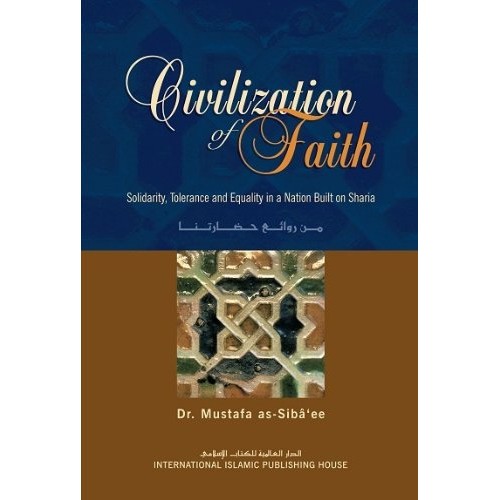
Civilization of Faith (IIPH)
Highlights:
We are living at a time when western civilization is at its peak and the Muslim nations are at their weakest point. They are dazzled by the power of the west with its wealth, scientific discoveries and technological advantages. Those who are unfamiliar with history might be unaware that this has not always been the case. A few hundred years ago, it was just the opposite. The Muslim Ummah was the superpower of the age, and Muslims were leaders in culture, science and technology. The cities of the Muslim world were the centres of learning to which people came from far and wide. The Muslims, at one time, were the most technologically-advanced civilization on the earth. The uniqueness of their civilization lay in the fact that, although they achieved a great deal in materialistic terms, they remained a compassionate society where the poor and disadvantaged were cared for. This book is a reminder to Muslims that they have a glorious past; for many centuries, they had the upper hand over their enemies. They became masters of the world when they adhered to Islam; however, when they became preoccupied with worldly gain and the pursuit of luxury, decline set in. Today, if Muslims take their religion seriously, they will once again be supported by Allah, the Exalted, and lead the world in all spheres of life. Nasiruddin al-Khattab has translated this thought provoking book into English. The hardcover version of this book that we have for sale is the revised 3rd edition, published in 2011.
RM19.00 – RM26.00Price range: RM19.00 through RM26.00
HardcoverSoftcover
Clear


The Valley Came Alive (H/B)
Highlights:
Darussalam is proud to present the abridged English translation of the classic work: Al-Bidayah wan Nihayah, focusing exclusively on the life of Prophet Muhammad (peace be upon him). This volume contains a detail account of the life and times of the Messenger of Allah taken from a number of historical and traditional sources. The book reports the events of his blessed life, his battles, military campaigns, the delegations that met him, and sheds light upon the unique exemplary qualities, virtues and signs of his Messengership that make him a guide and role-model for all of humanity until the end of time.
A1-Bidayah wan Nihayah (The Beginning and The End) by the renowned scholar Abu Al-Fida ‘Imad ad-Deen lsma’eel bin ‘Umar ibn Katheer, is considered one of the most authoritative sources on Islamic history.
RM60.00


Manhiyyat Prohibitions in Islam (P/B) (IIPH)
Highlights:
Whatever has been prohibited in the Qur’an and the Sunnah is for a good reason. Every Muslim is commanded to learn his or her religion, and being aware of these prohibitions is part of that essential knowledge. The Qur’an and the Sunnah enjoin virtuous behaviour, and any actions they prohibit are destructive deeds that a Muslim should avoid. In Prohibitions in Islam, Shaykh Muhammad Sâlih al-Munajjid explains that Allah Almighty and His Messenger (blessings and peace be upon him) have prohibited everything that contains any sort of harm or evil. These prohibitions vary in their degree of evil: they are either forbidden or detestable, and a practicing Muslim should avoid both kinds.
RM11.00

Islam is Your Birthright (IIPH)
5 ★
5 ★
1 Rating
5 ★
1
4 ★
0
3 ★
0
2 ★
0
1 ★
0
Highlights:
Majed Al-Rassi’s popular booklet, compiled from the works of respected writers on the subject of comparative religion, has been revised and greatly expanded in this new edition. Islam is Your Birthright is a useful and comprehensive guide for Muslims who would like to know how to address non-Muslims on the subject of the relationship between Islam, Christianity and other religions. It is as well a helpful, easy-to-follow explanation of the basic precepts of Islam that interested non-Muslims can pick up and read, without having had any prior study of Islam. Wise men and women know that they are in existence for a purpose and a final destination, whether they know that destination or not. Also, wise people know that if they do not know where they are going, then they will never arrive. In this little book, light is focused on: Why human beings were created What is their final destination How to reach ‘safely’ to that destination
RM23.00
Recently Viewed

Problems and Solutions (IIPH)
Highlights:
What should I do if I miss the fajr prayer? What are the consequences of excessive laughter? How should I deal with insinuating thoughts from Satan? How can I control my bad temper? What is so bad about staying up late night after night? Drawing on the great guidance of the Qur’an and the Sunnah, Shaykh Muhammad Sâlih al-Munajjid answers these questions and more, giving informative explanations and practical solutions to help you improve in your worship and in your performance of everyday activities.


Captured Thoughts
Highlights:
A Collection of Thought-Provoking Gems, Persuasive Eye-Opening Wisdom, Insights about Religion, Ethics, and Relationships.
RM285.00


Difference Between Advising And Shaming ( Dar as-Sunnah)
4.5 ★
4.5 ★
2 Ratings
5 ★
1
4 ★
1
3 ★
0
2 ★
0
1 ★
0
Highlights:
[This book] beautifully illustrates the difference between advising that is encouraged and shaming that is not permitted.
RM40.00


Learning Arabic Alphabet
Highlights:
Fun activities for kids to learn the Arabic alphabet!
RM13.00

The Problems of the Illegitimate Child (P/B)
Highlights:
This book addresses the views of the Sunni scholars regarding the importance of genealogical relationship (nasab) in Islamic family law and examines the role of legitimacy on the basis of the legal maxim “al-walad li al-firash”, evidence (al-bayyinah), and doubtful intercourse (wat’ shubhah). It also elucidates the views of the Sunni schools of law on how to establish illegitimacy. For the Sunni jurists, there are several situations that determine the illegitimacy of the child. A child is considered illegitimate if its birth is the outcome of adultery (zina) or the result of legitimate union but accompanied with imprecation (li‘an). Other circumstances include the birth of the child taking place in less than six lunar months, the father of the child being categorized as one who is incapable of begetting, or the birth as a result of marital relationship considered unlawful because of consanguinity. The book also deals comprehensively with the moral, religious, legal and other aspects of the illegitimate child and the foundling in the works of the Sunni jurists. The status and rights of the illegitimate child and the foundling in the Islamic family law of Malaysia and Brunei are also discussed by referring to some provisions from Federal Territory Act 1984 (Act 303) and Brunei law.
RM49.00
There are no reviews yet.