



| Weight | 0.335 kg |
|---|---|
| Author | |
| Publisher | The Islamic Foundation UK |
| Pages | 232 |
| ISBN | 0-86037-171-9 |
Remembrance & Prayer: The way of Prophet Muhammad s.a.w
RM75.00
Out of Stock
Highlights:
somdn_product_page
Compare
Remembrance and Prayer: The Way of Prophet Muhammad, was one of the first works of Shaykh al Ghazali’s to be translated into English. The book describes in vivid prose how the Prophet, upon him be peace, used to remember Allah and pray to Him. Not only are the exquisitely beautiful, deeply moving and penetrating words of the Prophet given in the English translation, but in the original Arabic as well, thus allowing those desirous of memorizing Arabic access to the original texts. The intimate relationship with Allah, which was the hallmark of the Prophet’s life, becomes clear and vivid. The book’s contents are immensely relevant. to the life and concerns of modern man, whose life has been made barren by the present secularist machinery.
SKU: SJ165
Category: Sharia, Fiqh and Jurisprudence
Additional information
Reviews (0)
Be the first to review “Remembrance & Prayer: The way of Prophet Muhammad s.a.w” Cancel reply
You must be logged in to post a review.
Related Products


Zakah According to the Quran & Sunnah (Darussalam)
Highlights:
Zakah, the third Pillar of Islam, is probably the first Pillar of its economic system. It represents the first and most important mechanism to implement economic justice and to provide sustenance to the economically unfortunate, two issues for which Islam is especially sensitive. These two issues are the essence of this book. This book consists of all the main issues of Zakat (i-e, Zakah on Gold, Silver, Paper Money, Livestock, Fruits, Grains, Rented Land, Buried treasures, Minerals, Trade, Shares, Stocks, and Exploited Assets etc). The main objective of this work is to serve an easy and authentic reference to the reader.
RM65.00


Getting the Best Out of Hajj
Highlights:
The book provides a realistic view of Hajj as it is today, with detailed explanations of all the rites. It provides Figh related issues about Hajj, Salah and personal behaviour according to the Quran and Sunnah, to enable you to obtain the best value for your time spent in the holy cities. It also provides information and suggestions about planning for the journey, what to expect and how to survive, so you can depart with full confidence. This is a must have for all those planning to go on Hajj!
RM75.00


The Concise Presentation of the Fiqh of the Sunnah and the Noble Book
Highlights:
Written by Dr. Abdul-Azeem Badawi and translated by Jamal al-Din M. Zarabozo, The Concise Presentation of the Fiqh of the Sunnah and the Noble Book covers the fiqh of diverse topics like purity, prayer, fasting, zakah, pilgrimage, marriage, business transactions, foods, inheritance, criminal offenses, and jihad. Dr. Badawi relies only on the Quran and the Sunnah, making it an authentic Islamic book on fiqh and a collection of sound hadiths.
RM90.00

Islamic Fatawa Regarding Women (H/B)
Highlights:
Women face a lot of special problems regarding their menses, postpartum bleeding, istihada, hijab, mixing with men, rights & duties with respect to their husband, husband’s household, children, inheritance, marriage, divorce, etc
More than 350 of such problems & issues have been answered in this book by Grand Mufti of Saudi Arabia Sheikh Ibn Baz, and the eminent scholars like Sheikh Ibn Uthaimin, Sheikh Ibn Jibreen and others.
.
RM56.00


Ibn Ashur Treatise on Maqasid al-Shariah (P/B)
Highlights:
Ibn Khaldun, the fourteenth century Arab historiographer and historian, is viewed as a founder of modern historiography, sociology and economics. He lived during a turbulent part of history, and out of his experiences, he ?conceived and created a philosophy of history that was undoubtedly the greatest work ever created by a man of intelligence…?. This work tells of the period of unrest in Ibn Khaldun?s life marked by political rivalries. It is during this turbulent period which provided him with the opportunity to write the Muqaddimah (or Prolegomena), earning him an immortal place among historians, sociologists and philosophe
RM72.00

The Pillars of Islam Made Easy – II Salah & Its Essential Conditions (H/B)
Highlights:
Salah is one of the five pillars on which the edifice of Islam rests. Most of us feel that we already know all there is about salah – the formal prayers of a Muslim. However, very few individuals actually do justice to it or derive any worldly or spiritual benefits from it.
Salah & Its Essential Conditions is an effort to detail the essential prerequiires of salah. Moreever, it takes a detailed look at its importance along with the different types of obligatory and voluntary prayers. It alsa presents an illustrated guide to help those who wish to learn or correct the performance of their prayers.
Inshallah, all those who wish to improve their salah will find plenty of help in this book whether they are looking for information on cleanliness and purify, locating the direction of qibla, improving their congregation during salah, making up for the missed salah, or joining acongregation when the imam has already sarted the salah, or joining a congregation when the imam has already started the salah. All in all, it is a relevant handbook on what the Prophet (saw) has described as the coolness of his eyes.
RM50.00

Shatibi’s Philosophy of Islamic Law (P/B)
Highlights:
Abu Ishaq al-Shatibi, who died in 1888, had sought an answer to the challenge posed by modernisation and change to Islamic law, by introducing maslahah, which forms the basis of his philosophy of Islamic law. In a fascinating way, the author leads us step by step to what he considers the true import of Shatibi’s views concerning jurisprudence.
RM41.00

The Right to Education, Work and Welfare in Islam (P/B)
Highlights:
In The Right to Education, Work and Welfare in Islam Professor M.H. Kamali develops an Islamic perspective on three connected and complementary areas of rights and liberties. He urges that education is often a necessary ingredient of professional work even more so now than in earlier times when the range and variety of specialised knowledge were relatively limited. A person who acquires education, whether generally or at advanced levels of specialisation, is more likely to stand in a better position to enter the workforce and thus to contribute to the welfare of the community.
The author commences his discussions on education, work and welfare in Islam by focusing on how each is treated in the Qur’an; and follows this by the example of the Prophet and, after him, the Pious Caliphs who gave prominence to the education and welfare needs of people at times both of scarcity and affluence. Professor Kamali then moves forward to our time and discusses the right to education, the education of children, institutionalisation of learning, academic freedom and the debate between science and religion.
The section on work elaborates on the value of work, work ethics, workers’ and employers’ rights and responsibilities, and the role and responsibility of governments.
Finally, the section on welfare focuses on the importance in Islam of caring for those who are in need and the different forms of provision that can be made available by individuals, the state and charities.
RM63.00

Preservation of Health in Islamic Law (P/B)
Highlights:
Preservation of health (hifz al-sihhah) is the most important branch of Islamic medicine since it is primarily concerned with the prevention of illness rather than cure. This book represents one of the few attempts to introduce the role of Islamic medicine, although Chapter One provides information about a historical background of the preservation of helath in Islam, its aim is to provide fresh ant timely overview of the major aspects of legal, ritual and spiritual structures of teh Islamic law (shariah). These include the laws related to Ibadah, Islamic family laws, foods and drinks as well as environmental laws, for maintaning and preserving human health. Findings indicated that prevention of any diseases from Islamic medical law presentive cannot attain any real success unless it emanates from an Islamic fundamental teaching, namely: the pillars of Islam. Iman and observance of the Islamic rituals such as Salah, zakah, Sawm and Hajj, have played an important role in shaping the attitude, behavior and model personality of the Muslim, in boosting the spiritual motivation or attitude change, and in disseminating the message of prevention. This indicates that bodily and spiritual health goes hand in hand and that pyscho-spritual balance and health is a primary consideration whereas physical health is a secondary one.
RM47.00


Principles of Islamic Jurisprudence (2nd Revised Edition)
Highlights:
This book offers a detailed presentation of the theory of Muslim law (usul al-figh). Often regarded as the most sophisticated of the traditional Islamic disciplines, Muslim jurisprudence is concerned with the way in which the rituals and laws of religion are derived from the Qur’an and the Sunna – the precedent of the Prophet. Revelation, which is given to man to restore unity and help him achieve a just and devout order in society as well as in the soul, must be interpreted so as to render it practicable in every culture, while not betraying its spirit and immutable provisions. To achieve this, additional sources of legal authority are recognized, including consensus (ijma), analogical deduction (qiyas), public interest (maslaha) and local customary precedent (urf). In employing these, the jurist guards the five principles which it is the purpose of Islamic law to uphold, namely, the right to life, sound mind, property, lineage and religion.
RM75.00

The Ruling concerning the Celebration of Mawlid an-Nabi
Highlights:
In this book, is an explicit CLARIFICATION of the MAJOR DOUBTS raised by the proponents of Mawlid an-Nabi, including;
- Mawlid an-Nabi is honoring the Prophet.
- Mawlid an-Nabi is celebrated by a large number of people in many towns and cities
- Commemorating Mawlid an-Nabi renews the memories of the Prophet
- Celebration of Mawlid an-Nabi is out of love for the Prophet and and an expression of one’s love, which is permissible.
- awlid an-Nabi is a Bidah Husna (good innovation) because it is a means of showing gratitude towards Allah for sending the Prophet.
- The saying of Umar, ‘What a good Bidah is this?’
Additional quotes by Shaikh Muhammad ibn Ibraheem Aal-Shaikh have been added to further clarify these issues.
The booklet also has 2 valuable appendixes:
Appendix 1: Explanation of the Hadeeth, “He, who establishes/initiates a Sunnah Husna in Islam, ” in the words of Shaikh Sales al-Fawzan and Shaikh Muhammad ibn al-Uthaimeen (rahimahullah)
Appendix 2: A Dialogue between Shaikh al-Albaani (rahimahullah) and a proponent of Mawlid.
RM9.00 RM11.00

A Guide to Male-Female Interaction
Highlights:
Are Muslim men allowed to interact with female students, and vice versa, in a virtual classroom? Can a Muslim woman pursue a professional career that necessitates her interaction with men? Is it appropriate for a woman to serve her husband’s guests? Do mixed wedding ceremonies comply with the Sharia? Read this bilingual book to find the answers and more!
RM56.00
Recently Viewed


The Salah – The Prophet’s Prayer Described (H/B)
5 ★
5 ★
1 Rating
5 ★
1
4 ★
0
3 ★
0
2 ★
0
1 ★
0
Highlights:
It is not possible to us to perform the Salah (Prayer) as it should be performed unless we know the detailed description of the Prayer shown by Prophet Muhammad sallallahu ‘alayhi wasallam, such as essentials, manners, forms, supplications and remembrances. However, detailed familiarity with these aspects of the Prayer is difficult to be achieved by most people nowadays because of their limiting themselves to a particular madhhab (school of thought). In every mudhhab, there are traditions and sunnahs (Prophetic examples) which are not found in other madhhabs, and in every mudhhab there are sayings and actions which cannot be authentically traced back to the Prophet.
Many any books have been published on the Prayer of the Prophet but most are by later scholars that cater for a particular muddhab. This famous work, translated from the original Arabic Sifah Salah al-Nabi, brings together as many features of the Prophet’s Prayer from the takbir to the taslim, so that Muslims can fullfil the Prophet’s command to “pray as you see me pray”. This work is the result of an intensive research by the author on various traditions (Hadiths) and their relevance, judjed according to the strict rules of the science of Hadith.
RM35.00


Early Sources For Prophet Muhammad’s Biography (H/B)
Highlights:
In ‘Early Sources for Prophet Muhammad’s Biography’, Dr. Muhammad Saeed Mitwally aims to prove that applying Western methods of critical analysis to the available Muslim sources can take us back to early, reliable information about the Prophet (sa).
Early Western biographies of the Prophet of Islam (sa) were largely based upon the Qur’an, as well as upon the late Muslim sources dating from the sixteenth century. After the publication of Goldziher’s Muhammedanische Studien in 1890, the reliability of Muslim sources became controversial. This stance was intensified by the publication of Schacht’s The Origins of Muhammadan Jurisprudence, in which he claimed that none of the Hadith literature is authentic. In this book, Dr. Muhammad Saeed Mitwally successfully challenges some of the problems raised by the pessimistic attitude.
Students of Hadith will find this study thought-provoking and informative.
RM54.00


I Love Arabic: Arabic Alphabet and Writing
Highlights:
Arabic Alphabet and Writing, the second book in the I Love Arabic series, introduces young learners to identifying Arabic letters and writing them. This colourful book presents each letter with a charming illustration, which the young learner has to colour and then practice writing the letter. Arabic Alphabet and Writing is an exciting first book for young learners who want to master Arabic writing. Arabic Alphabet develops these skills: * Identifying letters * Sequencing letters * Writing letters.
RM25.00


An Inspired Life – The Prophet Muhammad PBUH (H/B)
5 ★
5 ★
1 Rating
5 ★
1
4 ★
0
3 ★
0
2 ★
0
1 ★
0
Highlights:
An inspired life informs and inspires with its insights into the birth of the Islamic faith and the tribulation encountered by its Prophet Muhammd ( PBUH ) and his steadfast followers prior to the the acceptance and establishment of the religion.
The Author has provided a fascinating glimpse into the life of the Prophet Muhammad (PBUH), which clarifies his role of divine messenger and extols his attributes and personal qualities as a model muslim.
RM50.00
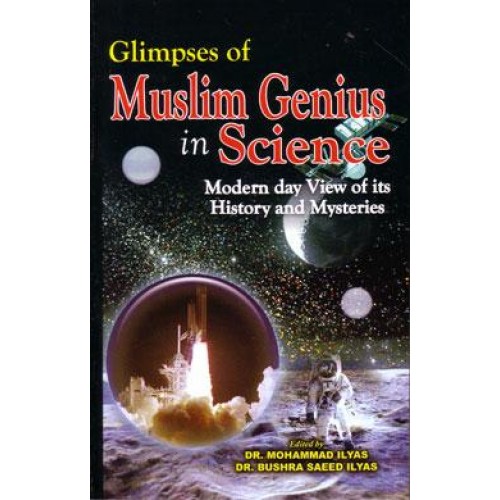

Glimpses of Muslim Genius in Science (P/B)
Highlights:
This should be educational for Muslims & non-Muslims & create a better East-West appreciation for mutual role. This book will enforce the fact that the civilization which produced this phenomenal output also has potential in the future.Dr. Mohammad Ilyas & Dr. Bushra Saeed Ilyas
RM22.00

Kindness to Parents
Highlights:
Kindness to Parents is a very enlightening booklet by Abdul Malik Al-Qasim. He has collected several stories and narrations that demonstrate the Birr (being dutiful) and kindness to our righteous Salaf towards their parents’ needs and necessities, in obedience to Allah’s worship in sincerity. He refers from the Noble Qur’an that a man is never allowed to say ‘Uff” (fie) if he smells a bad order coming from his parents or one of them.
The author has exposed shortcomings and errors of many among us who don not preserve the rights of their parents.
RM17.00


Buy 1 : At-Taqweem Calendar + Get Free 1 : Note Book (Random)
5 ★
5 ★
1 Rating
5 ★
1
4 ★
0
3 ★
0
2 ★
0
1 ★
0
Highlights:
A Gift for You and Yours: Grab One Today!
RM45.00 RM72.00
There are no reviews yet.